
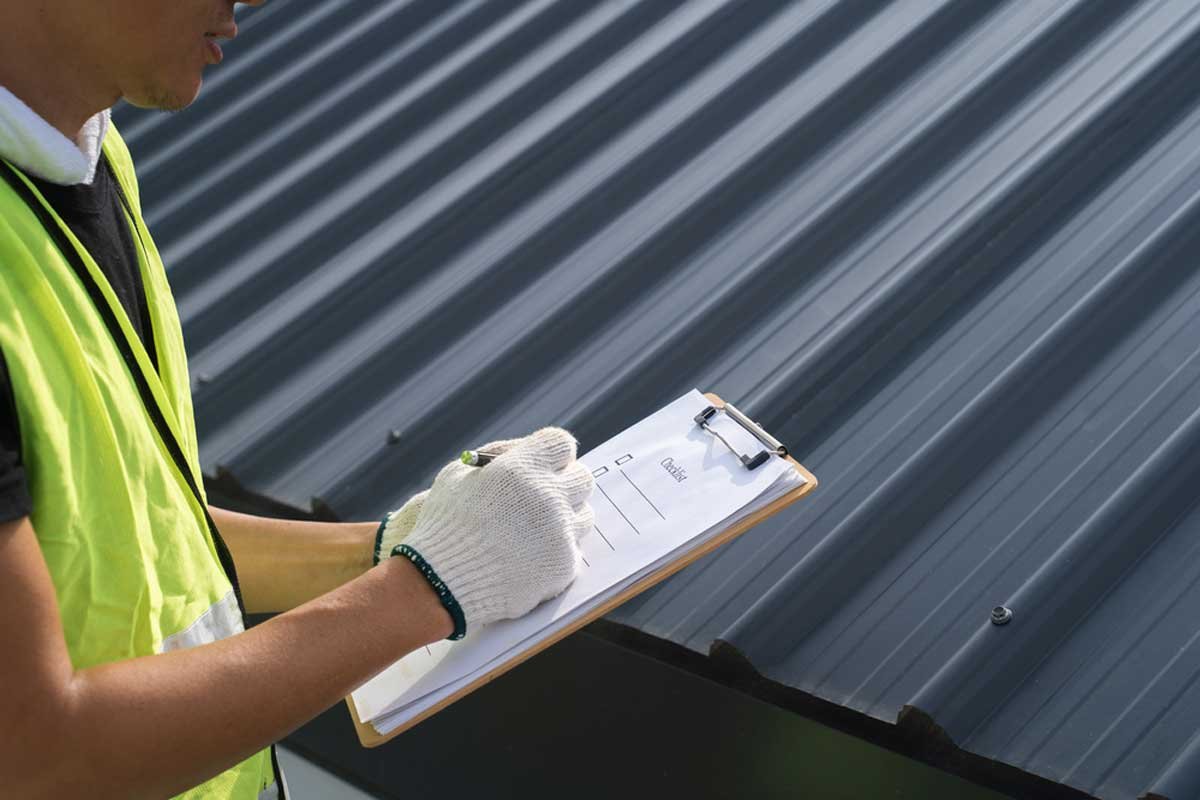
The free roof inspection may be the most common offer in home-services advertising — and one of the least standardized. For some companies it means the better part of an hour on the roof and in the attic with a camera. For others it means a slow drive past the house. For homeowners the difference matters enormously, because an inspection is the single cheapest moment in the entire life of a roof to catch a problem.
We asked Rodney Eldik, manager of Armour Shield Roofing’s GTA operation, to pull back the curtain: when to book an inspection, what a legitimate one involves, and how to tell a thorough inspector from a travelling sales pitch. His answer to the first question doubled as his philosophy on the whole subject:
“The best time to inspect is late spring — after the last freeze, before the summer heat, when winter damage is still visible and there’s time to fix it before fall rain. Once a roof passes ten years, we put clients on a two-year cycle. Any provider of roofing services in Mississauga, Ontario should hand you photos from the roof, not just a verbal summary.”
Why spring beats fall
Fall inspections have their place, Eldik allowed, but spring is when the evidence is freshest. Winter is what damages roofs in this climate, so inspecting immediately after it means seeing everything the season did — lifted shingles, cracked sealant, flashing that ice pushed out of position — before summer heat re-seals some of it cosmetically and hides the clues. Spring also hands the homeowner the entire construction season to schedule repairs on their own terms. A problem found in late October becomes a negotiation with the weather; the same problem found in May is a negotiation with a calendar.
The four zones of a proper inspection
Asked what his crews actually examine, Eldik broke a real inspection into four zones. First, the roof surface itself: shingle condition, granule loss, cracking and cupping, lifted or missing tabs, and the state of the ridge caps, which age fastest of all. Second, every penetration and junction — chimney flashing, wall flashing, pipe boots, vents, skylights — because that is where the majority of leaks originate. Third, the drainage system: eavestroughs, downspouts, and the drip edge. Fourth, and in his experience the zone most companies skip entirely, the attic. From underneath, an inspector can see water staining on the decking, compressed or damp insulation, mould, daylight through the boards, and whether the ventilation is actually moving air. An inspection that never looks at the underside of the roof, he said flatly, is half an inspection.
On the photo requirement from his quote, Eldik offered two justifications. The first is simple honesty: most homeowners cannot get onto their own roof to verify what they are being told, and dated photographs close that gap while keeping everyone accountable — including his own crews. The second is the paper trail. A photographic baseline lets the next inspection distinguish a worn spot that is deteriorating from one that has stayed stable, and a documented history of the roof’s condition carries genuine weight with an insurer if a storm claim ever arises.
What turns up, and what to do between visits
The findings across Mississauga are remarkably consistent, according to Eldik. Failed pipe boots top the list, since the rubber simply does not last as long as the shingles around it. Then come flashing problems at chimneys and sidewalls — especially where old caulking was used as a crutch — splitting ridge caps, granule loss concentrated on the sun-baked south and west slopes, and, inside the attic, soffit vents smothered by insulation pushed into the eaves during some long-forgotten renovation. Very few of these cost much on the day they are discovered, which in his view is the entire argument for discovering them.
Between professional visits, Eldik encourages a modest routine, with one firm boundary: stay off the roof. From the ground, a walk around the perimeter with binoculars after major weather will reveal anything lifted, missing, or out of pattern, and the eavestrough outflow will show granule buildup. Inside, a flashlight glance from the attic hatch a couple of times a year is enough to catch staining or mustiness early. What he asks homeowners never to do is climb up themselves; every year people are seriously hurt performing amateur roof checks to save the cost of a service call, and professional crews are trained, equipped, and tied off for a reason.
His test for separating a genuine inspection from a disguised sales visit comes down to time and evidence. A real inspection consumes most of an hour and produces a written or photographic record that includes the good news along with the bad. A sales visit takes ten minutes and produces urgency. When every finding is catastrophic and the only remedy is a replacement signed on the spot, Eldik advises getting a second opinion — noting that a trustworthy inspector is happy to report a roof has five good years left, because that honesty is precisely why the client will call again in five years.
Our thanks to Rodney Eldik and the team at Armour Shield Roofing.
Disclaimer: This article summarizes an interview and is provided for informational purposes only. Inspection practices, building code requirements, and municipal rules evolve over time and vary by jurisdiction, and readers are responsible for verifying current requirements with their local authorities. Do not attempt rooftop access yourself; rely on licensed, insured professionals for any at-height assessment of your home.