
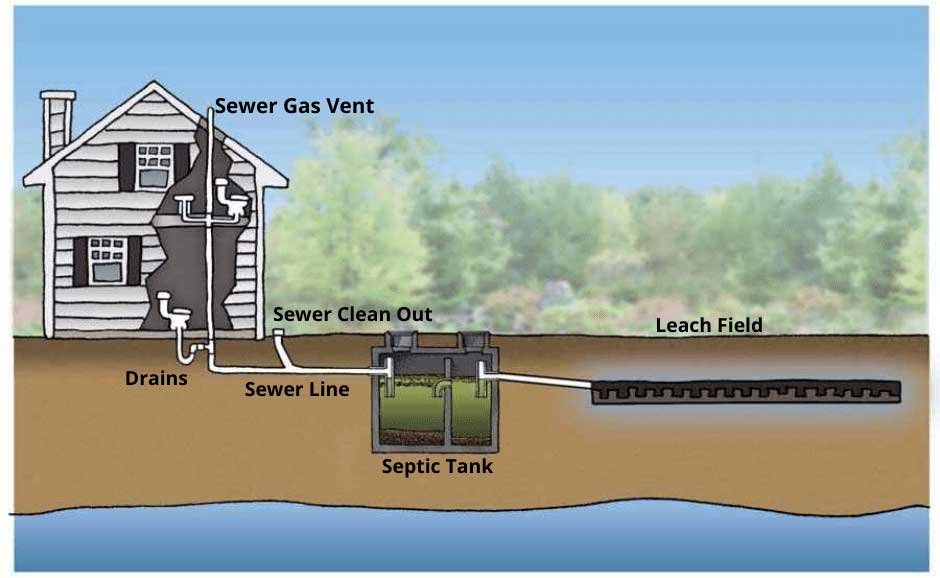
The smell comes and goes, which is exactly what makes it confusing. It’s not there every day. Then suddenly it is, usually near one specific spot in the house.
That pattern is actually the biggest clue. A sewer gas smell in house plumbing almost always traces back to one small, boring mechanical part: a trap that’s lost its water seal.
What’s Actually in That Smell
Sewer gas is a mix of hydrogen sulfide, methane, and ammonia, all byproducts of organic waste breaking down in the pipes.
Hydrogen sulfide is the “rotten egg” component, and it’s the one with real health effects. OSHA notes that even low concentrations of hydrogen sulfide can cause headaches and eye irritation. That’s well before reaching anything close to dangerous.
A house isn’t a sealed manhole. Residential exposure from a dry trap sits at the mild end of that range.
Still, a persistent smell is worth treating as a real signal, not just an annoyance.
The Trap Is the Only Thing Stopping It
Every drain in the house has a curved section of pipe just underneath it, called a P-trap. Sinks, tubs, and floor drains all have one.
That curve holds a small amount of water, creating the seal that keeps sewer gas from traveling back up through the drain and into the room.
Nothing else in the fixture blocks the smell. Remove the water, and the pipe underneath is just an open path straight to the sewer line.
Why a Trap That Worked Fine Dries Out
A trap doesn’t fail. It just evaporates.
A drain used every day gets refilled constantly, so the seal never has a chance to disappear. A drain that sits untouched for a few weeks is a different story.
Most traps dry out somewhere around three to four weeks of disuse. That’s faster in a dry winter house, slower in a humid climate.
Guest bathrooms, basement floor drains, and laundry tubs are the usual culprits. They’re exactly the fixtures nobody uses on a normal week.
When It’s Not Evaporation: Vent Problems
Every trap needs a vent pipe connected to it. That vent lets air into the drain line.
Without it, water can get siphoned out of the trap when another fixture nearby is used. A blocked or undersized vent can pull the water out of a trap in a single flush.
That happens long before normal evaporation would do the same.
A smell that comes back within a day or two of refilling a trap almost always points to a vent problem. It’s not a disuse problem anymore.
That distinction changes the fix, since one takes 30 seconds and the other usually needs a plumber.
Where to Check for a Sewer Gas Smell
Start with whichever drain sits closest to where the smell is strongest. In most houses, the search quickly narrows to only a few fixtures.
Bathroom
A guest bathroom or a shower that only gets used when company visits is the single most common source in the whole house.
The toilet, the tub, and the sink each have their own trap. Any one of them can dry out independently of the others.
That is exactly the sequence covered by a bathroom plumbing maintenance check, venting included.
Kitchen
Daily use keeps a main kitchen sink’s trap full, but a secondary sink or a rarely run garbage disposal can still dry out.
A dishwasher’s air gap is a separate, unrelated fitting. A failed air gap smells different too, more like standing dishwater than sewage.
Basement and Floor Drains
Basement floor drains can go months without a drop of water near them, which makes them the classic dry-trap case.
It’s also the drain most homeowners forget exists until the smell shows up.
Laundry
A laundry standpipe has its own trap too.
An empty house, or just a stretch without laundry, is enough time for it to dry out like any other unused fixture.
The Quick Fix, and When It Doesn’t Work
Pour a couple of cups of water down the suspect drain and wait a few minutes.
If the smell disappears and stays gone, the trap was simply dry, and the problem is solved.
If the smell returns within a day or two, the issue isn’t disuse. It’s either a vent blockage pulling water back out or something further along in the drain line.
That’s the point to call a plumber instead of repeating the water trick every few days.
Questions Homeowners Ask
Can a dry trap actually make you sick?
Not at the low levels a single dry trap produces in an open house.
The mild symptoms OSHA describes, headache and eye irritation, apply to sustained exposure. Those levels run far higher than a drafty bathroom ever sees.
Why does the smell only show up sometimes?
Trap seals don’t fail all at once. A partially evaporated trap can still block most of the gas most of the time.
A draft, a pressure change, or someone running another fixture can briefly pull the smell through. Intermittent smell is actually a strong sign that a trap, not a sewer line problem, is the cause.
Does a floor drain need a trap primer?
In many jurisdictions, yes, for exactly this reason.
A trap primer feeds a small amount of water into a rarely used drain automatically. It keeps the seal intact without anyone having to remember to run water down a basement floor drain every few weeks.
Finding the Source Faster Next Time
Start at the drain closest to where the odor is strongest. Refill the trap once and pay attention to what happens over the next day or two.
If the smell comes back, note which fixture was involved and how quickly the odor returned before calling a plumber. That short history gives them something more useful than a vague report of a bad smell somewhere in the house.
Spraying air freshener near the general area and hoping it goes away only puts off the same troubleshooting.