
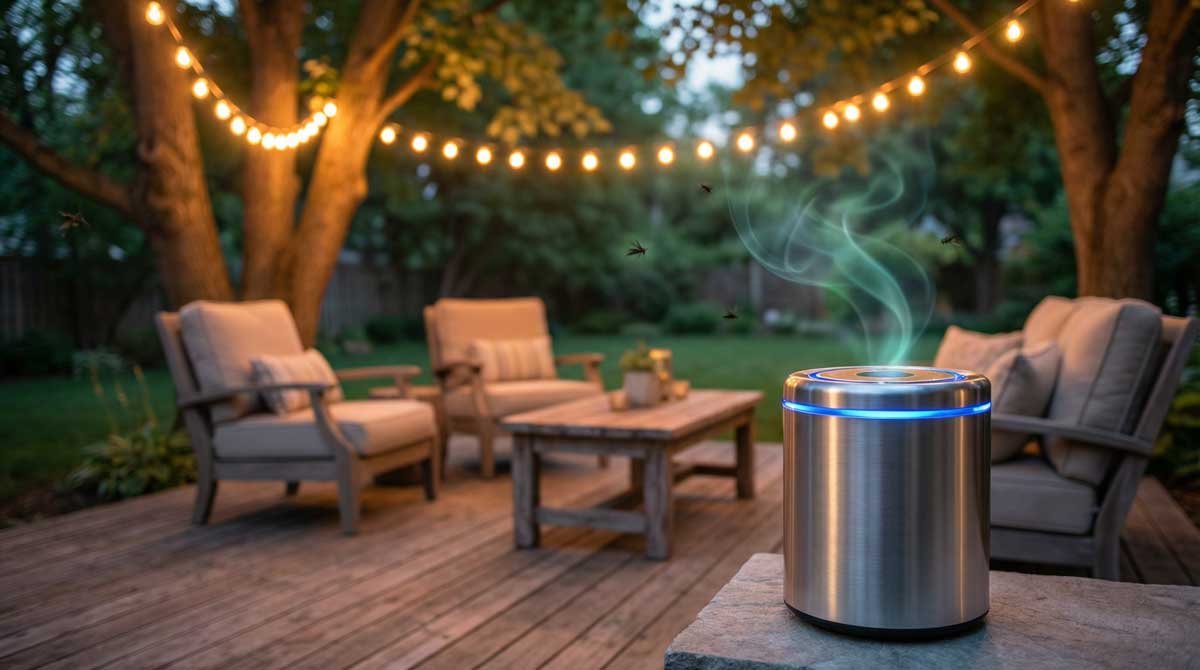
Mosquito control isn’t just about avoiding itchy bites, it’s about understanding what actually works and what doesn’t. With sprays, gadgets, and “miracle” solutions everywhere, it’s easy to waste money on products that sound good but underdeliver. This guide breaks down how mosquito repellent really works, how a mosquito repellent device fits into mosquito control, and when devices to repel mosquitoes are actually worth using.
Does Mosquito Repellent Work?
Yes, but only when it’s the right product used the right way. When properly selected and correctly used, mosquito repellent significantly reduces bites.
Mosquito repellent doesn’t kill mosquitoes. It works by interfering with how they detect you. Mosquitoes track humans through carbon dioxide (what you exhale), body heat, and lactic acid and other skin odors. Good repellents block or confuse their odor receptors, making it harder for mosquitoes to recognize you as a target. They reduce the likelihood of landing and biting, they do not eliminate mosquitoes from an area.
Repellent reduces bites; it does not eliminate mosquitoes. For long-term or low-chemical approaches, organic mosquito control methods, like eliminating standing water, improving airflow, and using plant-based deterrents, are often used alongside repellent to reduce overall pressure. If you’re in a heavy infestation, standing water nearby, dusk in humid weather, or after rain, even strong mosquito repellent won’t create a 100% mosquito-free bubble. In those conditions, protection may need to be layered with additional measures.
Effectiveness depends on the active ingredient, concentration, coverage area, wind and airflow, environmental conditions like humidity, and how evenly and consistently it’s applied, including proper reapplication timing. Used properly, mosquito repellent works. Used casually or incorrectly, it feels like it doesn’t.
What Repels Mosquitoes?
Topical chemical repellents are the most reliable. DEET, picaridin, IR3535, and oil of lemon eucalyptus (PMD) have strong scientific backing and work by blocking mosquitoes’ sensory receptors. These are the most effective options to repel for mosquitoes because they directly disrupt the insect’s ability to locate a host.
Spatial repellents provide area protection. Metofluthrin and allethrin are commonly used in heated vapor cartridges and some citronella-based systems. These compounds are often found in a mosquito repellent device and create a treated air zone that mosquitoes avoid.
Natural or plant-based repellents like citronella, lavender, peppermint, eucalyptus, and cedar may help in low-pressure environments, but they wear off quickly, have limited range, and generally require frequent reapplication. Natural oils can help repel for mosquitoes temporarily but offer shorter protection windows.
An important truth is that ultrasonic plug-in devices claiming to repel mosquitoes with sound have little consistent scientific support and are not widely supported by professional pest control research or field testing.
How Do Devices To Repel Mosquitoes Work?
Devices to repel mosquitoes create a treated air zone that interferes with host-seeking behavior. They don’t “push mosquitoes away” like a force field, they create an environment mosquitoes avoid because it disrupts their ability to detect carbon dioxide and skin odors. They reduce mosquito activity in the immediate area, not eliminate mosquitoes from the broader environment. Wind, open spaces, and airflow reduce effectiveness significantly.
A mosquito repellent device typically uses one of these methods. Heated vapor diffusion uses a powered unit to heat a cartridge containing a repellent, often metofluthrin or allethrin, which vaporizes and disperses into the surrounding air. Passive evaporation works without a heating element, allowing the repellent to slowly evaporate. Some devices to repel mosquitoes use fan-assisted dispersion to spread the active ingredient more evenly within a defined space.
Trap-based systems are different and not technically repellents. They attract mosquitoes using CO₂ and then capture or kill them, reducing populations rather than repelling them.
Mosquito Repellent Device Vs. Mosquito Repellent Sprays: Which Works Better?
For personal protection like hiking, yard work, or camping, topical mosquito repellent wins. It moves with you, protects your whole body, works regardless of wind conditions, and provides direct, full-body protection when applied properly.
For sitting in one place, a patio, deck, or outdoor dining, a mosquito repellent device can be very effective. Devices to repel mosquitoes protect a defined space, benefit multiple people at once, reduce the need for repeated skin application, and perform best in contained environments.
What competitors won’t say clearly is that devices aren’t stronger, they’re situational. They serve different purposes.
In high mosquito density, combining both methods works best. Think of it like sunscreen vs. shade: shade helps, sunscreen helps, and using both works best in harsh sun. For maximum protection during high mosquito activity, combining a mosquito repellent device with topical mosquito repellent is often more effective than relying on one method alone.
Where Do Devices To Repel Mosquitoes Work Best?
Devices to repel mosquitoes perform best in small patios, covered porches, tents, screened-in areas, balconies, outdoor dining spaces, and campsites with limited airflow or tree cover. The more contained the space, the better the performance. A mosquito repellent device works best in areas with defined boundaries and limited airflow, where the protective zone can remain stable.
They struggle in open, windy yards, beaches, large backyards or exposed lawns, high mosquito breeding zones, and areas near significant standing water. Air movement breaks the protective barrier and dilutes the protective zone, reducing effectiveness.
How To Repel Mosquitoes
No repellent beats source control. Just like you’d call a termite exterminator for structural pest damage, mosquito control starts with eliminating breeding sources rather than relying only on surface-level solutions. Eliminate breeding sources by dumping standing water weekly from planters, bird baths, gutters, buckets, kids’ toys, tarps, and other containers. Reducing unnecessary outdoor lighting at night or switching to warmer, insect-attracting-reduced bulbs can also help lower mosquito activity around the home.
Use body protection alongside that. EPA-approved mosquito repellent should be applied evenly to exposed skin and reapplied as directed. Light-colored clothing and long sleeves, especially at dusk, reduce exposed skin and help repel for mosquitoes by limiting access to skin.
Area protection works best when used strategically. Turn devices to repel mosquitoes on 10-15 minutes before use, place them upwind or in sheltered areas, and use multiple units for larger spaces. A mosquito repellent device is most effective as part of a broader setup, not on its own.
Timing also plays a role. Mosquito activity peaks at dusk, dawn, and after rain, so planning matters. Limiting exposure during peak hours can significantly reduce bites.
The most effective approach is not choosing one tool, it’s stacking protection. Effective mosquito control combines environmental control, personal mosquito repellent, and area-based devices to repel mosquitoes for the most consistent results.
What To Look For In A Mosquito Repellent Device
Active ingredient transparency matters first. If the company won’t clearly list the active ingredient, that’s a red flag. Clear ingredient labeling is an important indicator of reliability for any mosquito repellent device.
Look for proven effectiveness through EPA registration, clinical testing, and clear protection radius claims. Avoid vague promises like “up to 100% protection,” and be realistic about coverage area, square footage matters, and wind reduces effective coverage for devices to repel mosquitoes.
Refill cost is another key factor. Many devices to repel mosquitoes are affordable upfront but expensive long-term, so refill availability and ongoing cartridge replacement can significantly affect value over time.
The power source should match how and where you’ll use the mosquito repellent device. Battery, rechargeable, plug-in, or fuel-powered options vary in convenience and portability, and choosing the wrong one can limit usability.
Environment suitability is often overlooked. Some devices to repel mosquitoes are indoor-only, some are outdoor-only, and some can’t handle humidity or weather exposure well. If you’re buying for patios or campsites, confirm the device is rated for outdoor use.
Overall, clear ingredient labeling and realistic coverage claims, combined with appropriate power and environment suitability, are the strongest signals that a mosquito repellent device will perform as expected.
Are Devices To Repel Mosquitoes Worth It?
Devices to repel mosquitoes are worth it when you spend extended time sitting outdoors, host outdoor dinners, or have a small patio or porch where multiple people need protection at once. A mosquito repellent device works best in sheltered settings like patio gatherings, outdoor dining, or camping areas where you’re mostly staying in one place and don’t want to keep reapplying mosquito repellent.
They’re less worth it when you move around constantly, are in a windy area, expect total elimination of mosquitoes, or want actual population reduction. They’re also less suitable for large open properties, heavy infestations near standing water, or situations where you need to repel for mosquitoes while moving.
The honest answer is that they are tools, not miracle solutions. The real value comes from using devices to repel mosquitoes strategically, not expecting them to solve every mosquito problem alone. When combined with mosquito control basics and personal mosquito repellent when needed, they can significantly improve outdoor comfort.