
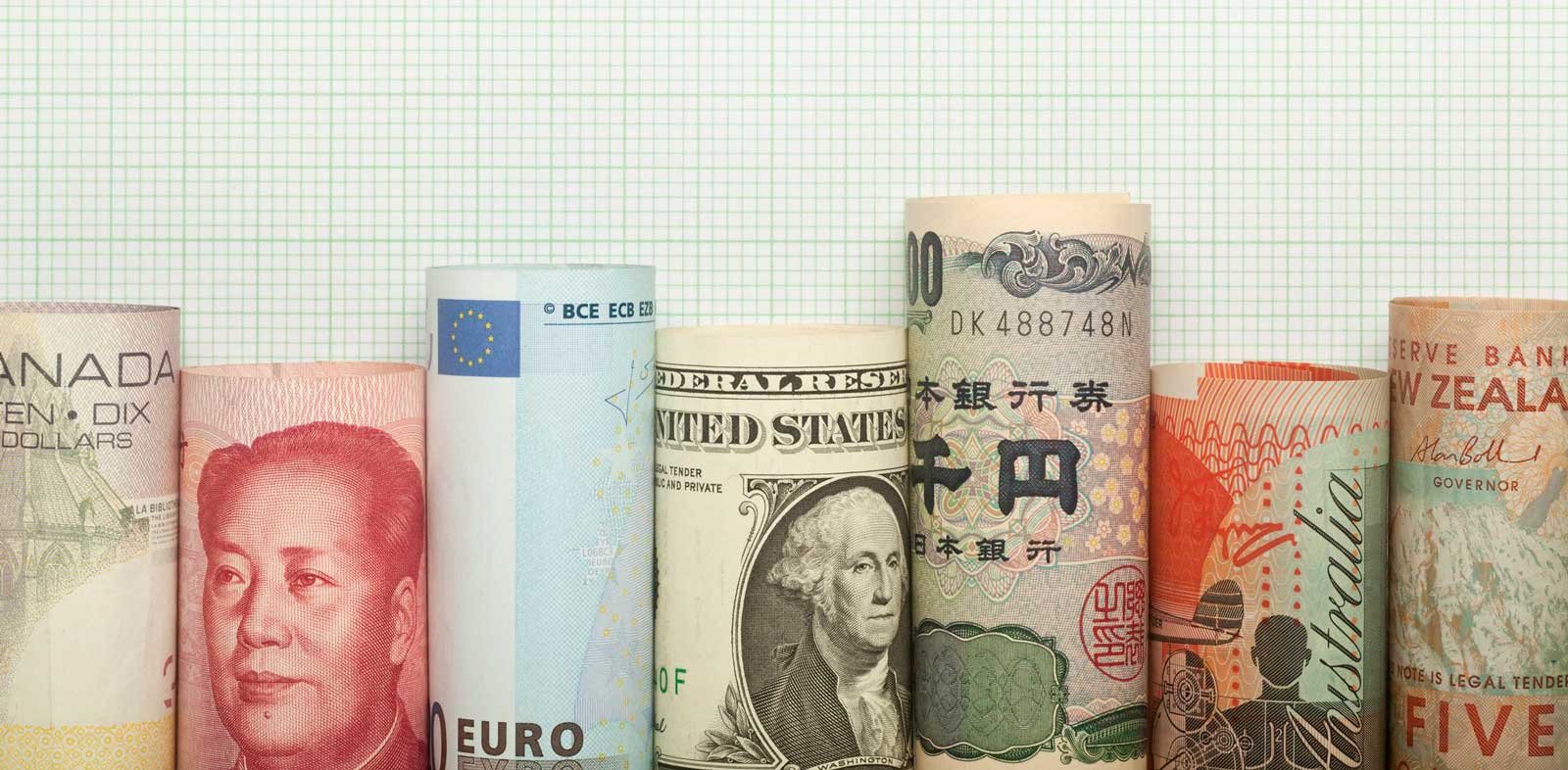
The global forex market is an incredibly diverse and complex entity, and one that comprises an estimated 170 different currencies.
Since the cessation of the Bretton Woods Agreement in the early 1970s (which pegged international currencies to the value of the USD), fiat currencies have operated in a free, floating market, arguably making them vulnerable to wider range of macroeconomic factors.
In the article below, we’ll look at the primary factors that influence currency exchange, while asking why they’re so influential for anyone holding a forex account.
Basic Macroeconomic Factors Such as Interest Rates
In simple terms, macroeconomics studies a raft of economy-wide metrics such as inflation, price levels and GDP, with these individual elements constantly fluctuating and having a direct impact on currency values.
Interest rates are arguably the most influential macroeconomic factor, while a country’s base rate is also managed directly by the monetary policy of a relevant central bank. Generally, rates are lowered during times of austerity as part of wider quantitative easing measures, whereas incremental increases are issued as the economy grows.
As the coronavirus pandemic raged in 2020, governments across the globe chose to slash their base interest rates en masse.
This had the effect of reducing capital inflows and interest from overseas investors, lowering the value of currencies such as the USD markedly in the process.

Terms of Trade
International trade is another key factor that impacts on currency values, particularly the ratio comparing export and import prices.
Similarly, current account deficits between nations and the total balance of payments have an ongoing impact on currency values in real-time, with these terms of trade associated with the total cost of transactions across specific borders.
For example, if the price of a country’s exports rises by a greater rate than that of its imports, its terms of trade will have improved markedly. This translates into rising revenues as a result of exports, increasing demand for a country’s currency in the process.
If the price of exports subsequently rises by a smaller rate than that of the country’s imports, the currency’s value will decrease in relation to its trading partners.
Differentials in Inflation
There’s an inherent link between the rate of inflation and currency values in a particular country, with nations that display a consistently lower rate of inflation typically exhibiting a higher currency value.
This means that its purchasing power increases relative to alternative currencies, which is why nations such as Japan, Germany and Switzerland have historically maintained such competitive currency values over time.
There’s also an inverse relationship between interest rates and inflation, so when base interest rates are kept low (as we discussed earlier in the piece), inflation and the wider economy tend to appreciate at a noticeable rate.