
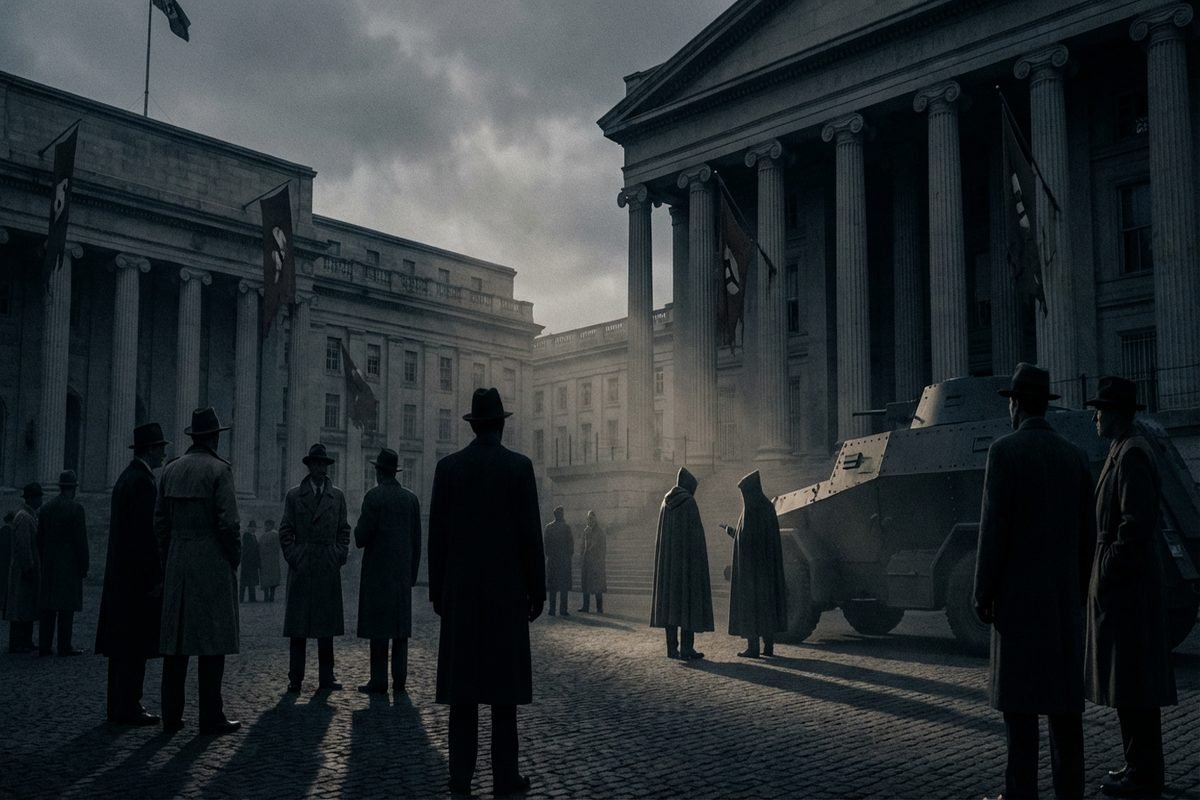
What Does Fascisterne Mean?
The word “fascisterne” comes from Danish and related Scandinavian languages, translating directly to “the fascists.” While this might seem like a straightforward definition, the term carries far more weight than its literal meaning suggests.
Rooted in the Italian word “fascismo,” which emerged in the early 20th century, fascisterne represents more than just a political label. It evokes a specific kind of historical memory—one tied to authoritarianism, violence, and the suppression of human freedom. In Danish wartime history, for instance, the term was often used to describe those who collaborated with Nazi occupiers, marking them as traitors in the eyes of their fellow citizens.
The word is not neutral. It carries the burden of betrayal, oppression, and the collective trauma of millions who suffered under fascist regimes.
The Birth of Fascisterne in Europe
Fascism did not appear out of nowhere. Its rise was deeply connected to the chaos that followed World War I. Across Europe, nations were grappling with economic collapse, political fragmentation, and widespread disillusionment with traditional institutions.
Italy became the birthplace of this ideology when Benito Mussolini seized power in the early 1920s. He promised Italians a return to greatness, discipline, and national pride at a time when the country felt humiliated and directionless. His movement took its name from the “fascio,” an ancient Roman symbol of bundled sticks representing strength through unity.
Germany soon followed. Adolf Hitler and the Nazi Party exploited the resentment many Germans felt after the Treaty of Versailles, which they believed had unfairly punished their nation. Hitler transformed fascism into something even more sinister by adding extreme racial theories and a genocidal agenda. Similar movements emerged in Spain under Francisco Franco, in Hungary, and in other corners of Europe, each adapting the core ideology to local conditions.
Core Beliefs That Defined Fascisterne
Despite regional differences, fascisterne movements shared several fundamental beliefs that set them apart from other political systems.
Authoritarian Control and Leadership Worship
Democracy was seen as weak and inefficient. Fascisterne advocated for a single, powerful leader who would embody the spirit of the nation and make decisions without the messy complications of debate or dissent.
This leader was not just a political figure but a near-mythical savior. Citizens were expected to show absolute loyalty, and any form of opposition was treated as treason. The state controlled the press, education, and cultural institutions to ensure that only one narrative prevailed.
Extreme Nationalism and Racial Ideology
Fascisterne placed the nation—or a particular race—at the center of everything. National identity was glorified, often through myths of ancient greatness and cultural superiority. Outsiders, immigrants, and ethnic minorities were portrayed as dangerous threats to the purity and security of the nation.
In Nazi Germany, this took the form of violent antisemitism and racial pseudoscience, which ultimately led to the Holocaust. In other countries, it manifested as xenophobia and the persecution of political or ethnic minorities.
Rejection of Democracy and Individual Rights
Under fascisterne rule, individual freedoms were sacrificed for the supposed good of the collective. Freedom of speech, assembly, and the press were among the first rights to disappear. Citizens were expected to conform, obey, and serve the state without question.
The idea that people had inherent rights simply by being human was dismissed. Instead, rights were conditional—granted or revoked based on loyalty to the regime.
How Fascisterne Gained and Maintained Power
The success of fascisterne was not accidental. These movements employed a sophisticated mix of psychological manipulation, legal maneuvering, and outright violence to seize and hold onto power.
They thrived during times of crisis, offering simple answers to complex problems. Economic hardship? Blame the Jews, the communists, or foreign powers. Political instability? Demand a strong leader who will restore order. By creating scapegoats and stoking fear, they built a base of support among those desperate for change.
Propaganda played a central role. Through radio broadcasts, films, newspapers, and mass rallies, fascisterne leaders crafted carefully controlled narratives that glorified the state and demonized enemies. Joseph Goebbels, Hitler’s propaganda minister, became infamous for his ability to manipulate public opinion on a massive scale.
Violence was another key tool. Paramilitary groups like the Blackshirts in Italy and the SA in Germany intimidated opponents, disrupted rival political meetings, and created an atmosphere of fear. Once in power, fascisterne regimes used the legal system itself to dismantle democracy, passing laws that gave leaders unchecked authority.
The Devastating Impact of Fascisterne Rule
The consequences of fascisterne rule were catastrophic. Civil liberties vanished almost overnight. Secret police forces, such as the Gestapo in Germany and the OVRA in Italy, monitored citizens, arrested dissidents, and turned neighbors into informants. Fear became a tool of governance.
Economically, fascisterne states launched massive infrastructure projects to reduce unemployment and project strength. While these efforts provided short-term benefits, they often masked deeper economic problems and were funded through militarization and conquest.
The human cost was staggering. The Holocaust stands as the most horrific example of fascisterne ideology in action. Six million Jews were systematically murdered, along with millions of others—Roma, disabled individuals, political prisoners, and anyone deemed undesirable by the regime. The aggressive expansionism of fascist states also triggered World War II, a conflict that claimed tens of millions of lives and left much of Europe in ruins.
Recognizing Fascist Thinking in the Modern World
Though the major fascist regimes were defeated in 1945, the ideology has not disappeared entirely. Elements of fascist thinking can still be found in various political movements around the world today.
Warning signs include attacks on the free press, the scapegoating of minority groups, the glorification of violence, and the erosion of democratic norms. Leaders who present themselves as the only solution to national problems, who dismiss checks and balances, or who stoke division for political gain often echo the tactics of historical fascisterne.
Understanding these patterns is essential. History has shown us what happens when societies ignore the warning signs. Vigilance, education, and a commitment to democratic values are necessary to prevent the resurgence of such dangerous ideologies.
Lessons from the History of Fascisterne
The story of the fascisterne is not just a historical footnote. It is a stark reminder that democracy is fragile and must be actively defended. Freedom, human rights, and the rule of law cannot be taken for granted.
One of the most important lessons is the value of knowledge. By studying the rise and fall of fascism, we can better recognize when similar forces begin to emerge. We can learn to resist the temptation of authoritarian solutions, even in times of crisis.
Another lesson is the importance of protecting diverse voices and perspectives. Fascisterne thrived by silencing dissent and creating a culture of conformity. A healthy democracy, by contrast, depends on open debate, a free press, and respect for those who hold different views.
Ultimately, the history of fascisterne teaches us that the fight for freedom is never truly over. Each generation must choose to defend the principles that protect human dignity and prevent the return of tyranny.