
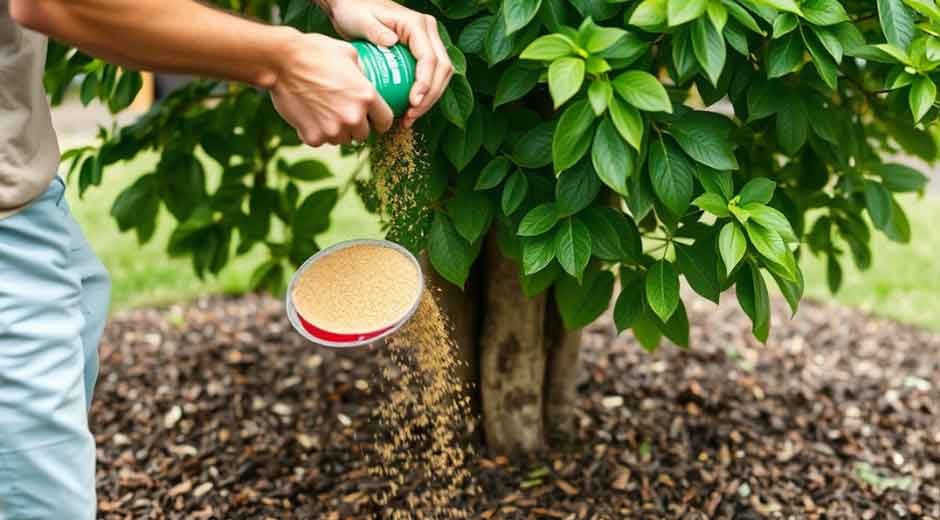
There’s something quite magical about trees. A towering oak, a flowering cherry, or even a modest hazel can completely transform your outdoor space. That is, of course, if you keep them happy and healthy.
Without the right nutrients, leaves droop, fruit shrivels, and branches look tired. Luckily, most nutrient deficiencies are easy to spot if you know what to look for. Here’s how to tell when your trees are hungry and what you can do about it.
Essential Nutrients for Trees
Trees rely on three key minerals to grow strong: nitrogen, phosphorus, and potassium.
Nitrogen is the green keeper of the bunch. It powers photosynthesis, helping your plants turn sunlight into the energy they need for strong, lush, and vibrant growth.
Meanwhile, phosphorus works below the surface, transferring that energy where it’s most needed to promote robust root development. In return, this sets the stage for healthy flowering and fruiting.
To complete the trio, potassium then regulates water balance and strengthens stems while also enhancing the quality of blooms and harvests. In addition, it boosts overall plant resilience, helping your greenery resist pests, disease, and unpredictable weather more effectively.
That said, it’s important to note that while these are the most crucial macronutrients, they’re not the only important elements. Trees also need smaller amounts of calcium, magnesium, and iron to stay fully balanced.
The Early Warning Signs
Leaves are like a plant’s report card. If you know how to read them, they’ll tell you what’s going on beneath the surface.
To spot if your trees are lacking essential nutrients, look for yellowing leaves, slow growth, or poor fruiting.
Pale yellow foliage can point to a nitrogen deficiency, usually showing on older leaves first. If the discolouration appears mainly between the veins, this is likely a sign of insufficient magnesium.
As for brown, scorched edges, these often indicate a shortage of potassium, and so does underwhelming fruiting or flowering.
On the other hand, if growth seems to slow down or the roots aren’t developing well, a lack of phosphorus could be holding your tree back.
Test the Soil
Soil is essentially your trees’ power supply. If it’s not wired with the right minerals, growth will slow down to a dim flicker.
A simple DIY kit will tell you exactly what your soil needs. But if you want a more detailed report, take a dry sample from around 15–38 centimetres deep and send it off to a certified lab.
In addition to highlighting the soil’s nutrient content, this will also give you a better idea of the pH levels you’re working with.
Even a slight change in pH can dramatically affect how well your plants absorb nutrients. So, make these checkups part of your annual routine to catch any deficiencies before they affect your garden’s health.
With your test results in hand, you can fine-tune your approach, restore balance, and give your green companions the best shot at thriving.
Organic vs Chemical Treatments
Once you know what your trees need, it’s time to decide how to feed them.
Organic treatments are like a slow-cooked meal for your plants—wholesome, satisfying, and nourishing for the long haul.
Compost and well-rotted manure tick all three of these boxes. Over time, they enrich the soil with a buffet of nutrients, encourage beneficial microbes, and improve water retention.
Chemical fertilisers, on the other hand, are the equivalent of a strong energy drink. They deliver a quick nutrient boost that’s especially handy for trees struggling with severe deficiencies.
Though they don’t linger as long as organic matter, they can make a visible difference in a short time.
Your choice will ultimately depend on your plants’ current needs and your long-term goals for the garden. Compost is unbeatable for lasting improvements, while chemical options are useful for urgent fixes.
However, you have to be careful, as chemical fertilisers can burn the roots or disrupt the soil’s balance if overused. To avoid that, stick to the recommended dosage.
Regardless of which option you choose, make sure you apply it carefully to prevent nutrient runoff. That way, you’ll keep both your plants and the surrounding environment in good shape.
Simple Steps to Prevent Nutrient Deficiencies
As with most gardening problems, it’s much easier and cheaper to prevent nutrient imbalance than to restore it later on.
Over time, your soil will thank you for every bit of organic matter you return to it. In the spring and autumn, mulch will boost its water retention and regulate its temperature.
If pesky weeds keep resurfacing and hogging your plants’ nutrients, mulching will also help keep them at bay. Just make sure to leave a small gap around the base of the trunk to prevent crown rot.
Compost is another invaluable supplement. It steadily improves the soil’s fertility and structure, creating a richer growing environment year after year. Plus, it’s a great way to cut costs and recycle kitchen and garden scraps from the comfort of your own home.
Choosing species that naturally suit your local conditions can save you endless headaches as well. Native trees generally need less watering, fertilising, and pruning than their exotic counterparts.
The last but perhaps most important step in preventing nutrient imbalance is to create a tailored feeding schedule. It’s the best way to ensure that your precious green giants can stay strong through all stages of their development.
When to Call in the Experts
Even the most devoted gardener occasionally needs a helping hand. If yellow leaves keep spreading or your plants stop growing despite your efforts, it would be wise to call in a certified tree surgeon.
These professionals possess the right tools and knowledge to diagnose problems quickly and accurately. They’ll inspect your garden thoroughly and provide a tailored treatment plan for any problems they spot.
If needed, they can also perform tree surgery to prune, treat, or safely remove affected branches. In many cases, early professional intervention can restore a struggling tree back to full health.
Conclusion
Catching nutrient deficiencies early is like noticing your car making a funny noise before it breaks down. The sooner you step in, the less likely it is to turn into a full-blown disaster.
With a sharp eye, a little testing, and the right care, your trees can bounce back stronger than ever. So, listen to what your leafy friends are trying to tell you and do what you can to help them. In return, they’ll reward you with shade, colour, and timeless charm.