
Most homeowners don’t think about their HVAC filter until something feels off, weak airflow, rising energy bills, or an unexpected HVAC repair. That small filter plays a major role in protecting your system, maintaining indoor air quality, and reducing the risk of costly HVAC system filter replacement issues. Knowing when to replace HVAC filter components properly helps your system last longer and run more efficiently.
How Often to Replace HVAC Filter
The honest answer: it depends on how your home actually lives and breathes, not just what’s printed on the box. HVAC air filters should be replaced based on system use and indoor conditions, not a fixed calendar date. Ignoring filter condition is one of the most common causes of avoidable AC repair during peak cooling season. Understanding true HVAC filter replacement frequency requires looking beyond generic recommendations.
For most homes, 1-inch filters last about 30-60 days, 2-4 inch filters about 3-6 months, and 5-inch media filters about 6-12 months. These ranges assume normal system runtime and are just a starting point for replacing HVAC filter components.
If you have pets, allergies, construction nearby, wildfire smoke, or you run your fan constantly, you’ll likely need to replace HVAC filter media sooner. Homes with pets, allergies, frequent HVAC use, or higher indoor dust levels typically need more frequent HVAC air filter change frequency adjustments. If you live alone in a clean, low-dust home and barely run your system, it may last longer.
The better and most reliable approach is to check the filter monthly and replace HVAC filter elements when they’re actually loaded or airflow begins to feel restricted, not when the calendar says so.
HVAC Filter Replacement Frequency: Manufacturer vs Real Life
Manufacturer guidance is designed for equipment protection. Real life is about air quality and system performance. Manufacturer recommendations are designed to protect HVAC equipment under average operating conditions and do not account for how often the system runs or the specific air quality challenges inside a home.
Most manufacturers recommend replacing a 1-inch filter every 30 days and thicker media filters every 3-6 months, assuming average dust levels, no pets, no smokers, and normal system run time. This baseline HVAC filter replacement frequency doesn’t reflect many real homes.
In real-world use, runtime matters more than time. A system that runs most of the day will load a filter much faster than one that runs intermittently. During winter, restricted airflow can overheat furnace components and increase the risk of heating repair if the filter isn’t replaced in time. If your system runs 18 hours a day in summer, a “90-day” filter won’t last 90 days. Homes with pets, smoking, remodeling, pollen, or wildfire smoke should shorten HVAC air filter change frequency regardless of what the filter packaging suggests.
The smartest move is to use manufacturer guidelines as a baseline, then adjust HVAC system filter replacement timing based on system runtime, indoor air quality goals, home environment, visible filter condition, system performance, and changes in airflow, not just the manufacturer’s generic interval.
What Affects HVAC Air Filter Change Frequency
Here’s what truly moves the needle: pets, one shedding dog can cut filter life in half, and hair and dander significantly reduce filter lifespan. Allergies, asthma, or smoke exposure require fresher filters more often to maintain lower particle levels, and smoke particles load filters fast. Construction or renovations clog filters extremely quickly with fine dust.
System runtime matters, whether you have a traditional furnace and AC or a heat pump, a system running 24/7 accumulates debris much faster than one running only a few hours per day. If your fan runs in “ON” mode continuously instead of “AUTO,” you’ll shorten HVAC air filter change frequency and need replacing HVAC filter media more often.
MERV rating also plays a role. Higher-efficiency filters trap more particles, which means they may load faster. Filter thickness and surface area matter as well, since larger filters last longer than thin ones. Frequent vacuuming and dust control can actually extend HVAC filter replacement frequency.
Filter replacement frequency should be adjusted whenever any of these factors change.
When to Change HVAC Air Filter
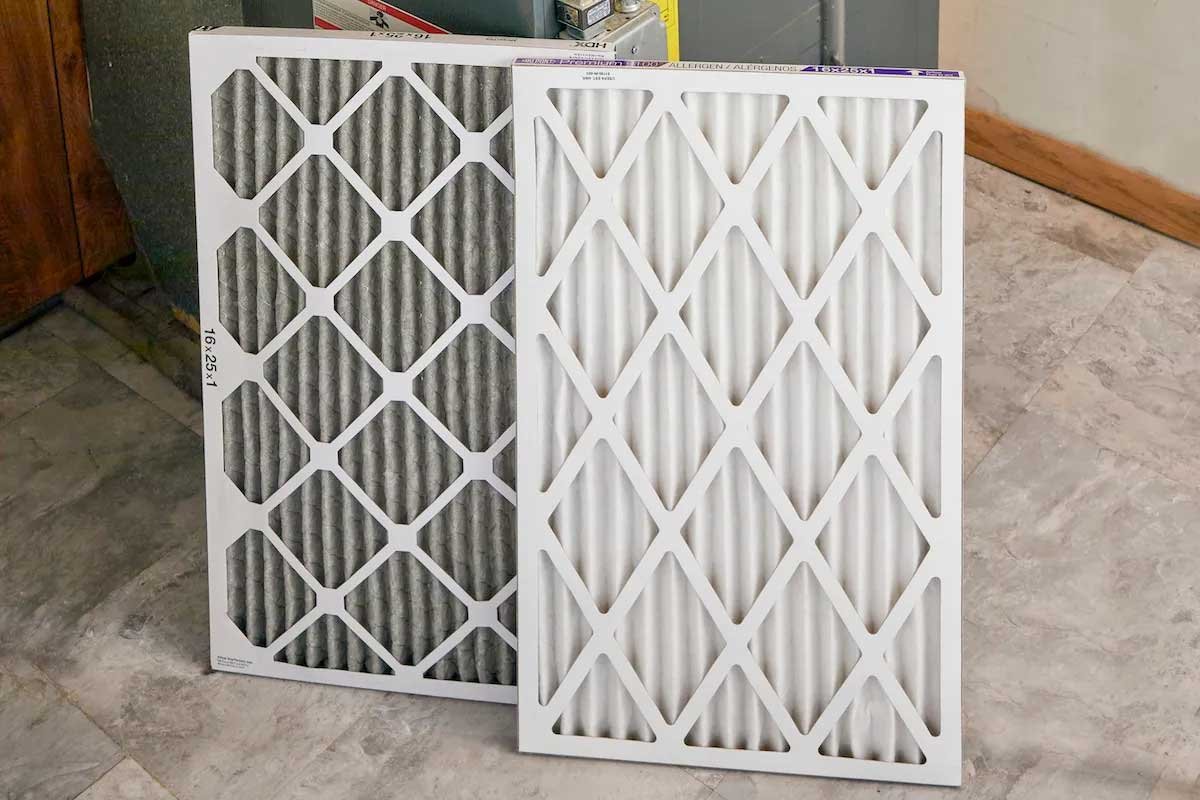
Change it when the filter surface looks visibly gray or matted, you see a noticeable dust layer on the intake side, airflow from vents feels weaker, allergy symptoms worsen, energy bills creep up, or the system seems to run longer to reach temperature. An HVAC air filter should be changed when it begins to affect system performance or airflow, even if it hasn’t reached the expected HVAC filter replacement frequency.
A good habit: check your filter on the first of every month. Replace HVAC filter components when they look loaded, even if it’s “early.” Monthly visual checks help catch these signs early and reduce unnecessary HVAC system filter replacement problems.
Risks of Delaying HVAC System Filter Replacement
This is where things get serious. A clogged filter doesn’t just reduce air quality, it affects your entire system. Reduced airflow means your system struggles to breathe, which forces longer run cycles and leads to higher energy bills. In cooling mode, low airflow can cause frozen evaporator coils, while in heating mode it can overheat internal components like the furnace heat exchanger.
Delaying HVAC system filter replacement restricts airflow, which affects both efficiency and component health. Over time, restricted airflow increases wear on the blower motor and shortens its life, while dust recirculates instead of being captured, reducing indoor air quality. Worst case? Expensive repairs that started with a $15 filter you didn’t replace HVAC filter soon enough.
Signs It’s Time for Replacing HVAC Filter
Look for these practical signs: the filter is dark gray across most of its surface, you can’t see light through it when held up, dust collects faster on furniture, the return vent looks dusty, you hear the system running longer than usual, static pressure readings (if measured) are elevated, whistling or increased air noise at the return vent, or uneven heating or cooling throughout the home.
Visual appearance alone isn’t always enough. A filter can look relatively clean while still restricting airflow. If system performance changes before the filter looks dirty, replacing HVAC filter media is still recommended.
Pro tip: Take a photo of a new filter when you install it. Compare it monthly. The difference becomes obvious.
How Filter Type Impacts HVAC Filter Replacement Frequency
Filter type changes everything. Fiberglass (basic, low MERV) filters are the cheapest option and protect equipment more than air quality, but they load quickly and inconsistently and need frequent replacing HVAC filter cycles, often monthly.
Pleated 1-inch filters (MERV 8-11) offer better particle capture and typically last 1-3 months, though they may load faster in dusty homes. High-MERV 1-inch filters (MERV 12-13) provide excellent filtration but can restrict airflow if the system isn’t designed for it and often require closer HVAC filter replacement frequency monitoring.
4-5 inch media filters have a larger surface area, last significantly longer, and maintain airflow better over time. Bigger filter equals more surface area, slower loading, and longer life, which is why many HVAC professionals recommend upgrading to a media cabinet to reduce frequent HVAC system filter replacement.
Can Replacing HVAC Filter Too Often Be a Problem?
In most cases, no. Replacing too often doesn’t harm the system, it just costs more. Replacing a properly sized filter more often than necessary does not harm the HVAC system. The primary downside is increased cost.
Problems typically arise only when constantly switching filter types (changing MERV ratings) or when filters with excessively high MERV ratings are used in systems not designed for them, which can affect airflow balance and create unnecessary HVAC system filter replacement issues.
But replacing HVAC filter media a little early? That’s far safer than replacing it too late.
A Simple Rule for HVAC System Filter Replacement
Here’s a practical rule homeowners can actually remember: check the filter monthly and replace HVAC filter components when visibly loaded or when airflow begins to drop, or at least every 90 days. Homes with pets, allergies, or heavy system use should shorten HVAC filter replacement frequency.
Add pets and the interval is typically cut in half; running the fan constantly can reduce it by 25-50%, and during allergy season the filter should be checked twice as often. If airflow or comfort changes before the filter looks dirty, HVAC system filter replacement is still advised.