
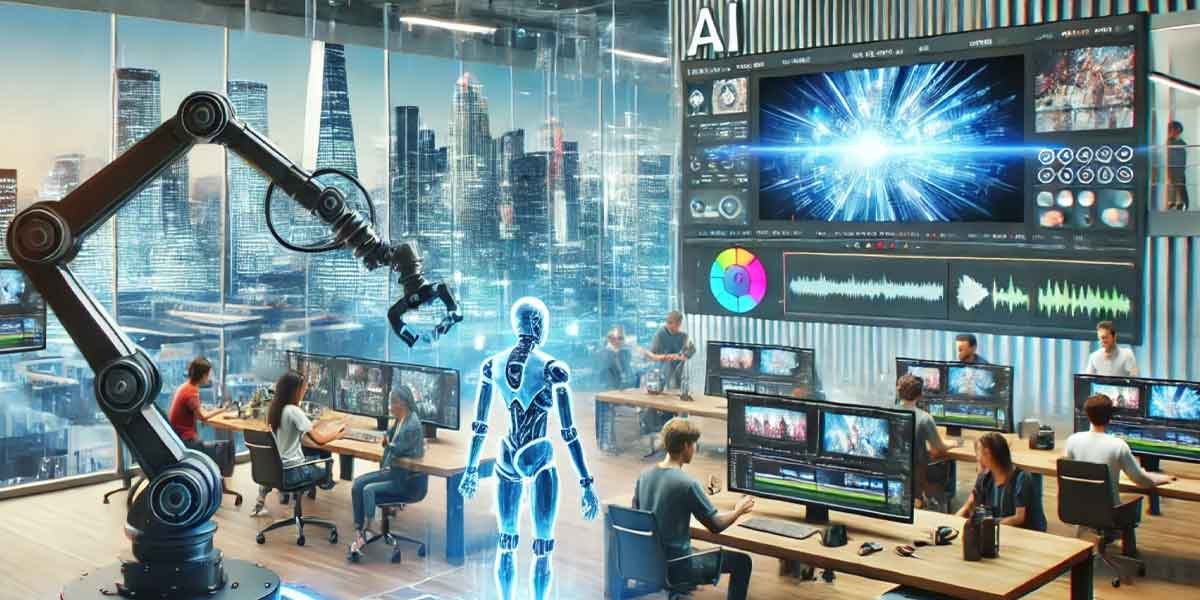
Video has become one of the most important formats for communicating online. Businesses use it to explain products, creators use it to build audiences, and professionals rely on visual content to make complex ideas easier to understand. At the same time, audiences have become more selective. They expect videos to be clear, engaging, well-paced, and visually polished, even when they are produced quickly.
This has created a difficult balance for modern content teams. Producing high-quality video traditionally requires planning, editing experience, visual design skills, and significant time. Artificial intelligence is changing that equation by helping creators automate repetitive tasks and explore ideas faster. AI does not remove the need for creative judgment, but it can make the production process more flexible. When used thoughtfully, AI-assisted tools can help creators spend less time on routine editing and more time developing strong stories, concepts, and visual experiences.
AI Is Simplifying the Video Editing Process
Video editing has traditionally involved many technical steps, from arranging clips and adjusting timing to adding captions, transitions, music, and visual effects. For experienced editors, these tasks are familiar, but they can still consume considerable time. For beginners, the number of controls and decisions can make the process intimidating.
AI-assisted editing is helping reduce some of that complexity. Instead of manually handling every repetitive adjustment, creators can use intelligent features to accelerate parts of the workflow. This is particularly useful when producing short-form content, marketing videos, tutorials, or multiple versions of the same project.
A ChatGPT video editing tool can fit into this broader shift toward idea-driven production, where creators focus first on what they want to communicate and then use technology to help develop the visual result. The final outcome still benefits from human review, because storytelling, pacing, audience expectations, and brand consistency require creative judgment.
AI-Generated Images Expand Creative Possibilities
Strong video content often depends on supporting visuals. Thumbnails, backgrounds, illustrations, concept images, and other graphics can influence how viewers understand and respond to a piece of content. Creating these assets manually can take substantial time, particularly when a project requires several variations.
AI image generation provides another way to explore visual concepts. A creator can start with a description and experiment with different compositions, subjects, styles, or environments before deciding which direction best fits the project.
Tools such as GPT Image 2.5 can become part of this exploratory stage, giving creators additional options when developing visual assets. The advantage is not simply speed. Being able to test multiple concepts quickly can encourage more experimentation during the planning process.
Still, generated images should be reviewed carefully. Composition, realism, text, proportions, and consistency may need refinement before an asset is suitable for professional use. AI can accelerate ideation, while human editing helps determine the final quality.
Faster Production Can Support Better Content
Efficiency is one of the clearest advantages of incorporating AI into creative workflows. Content teams often repeat the same activities across projects, such as preparing captions, adjusting formats, creating variations, or developing supporting visuals. These tasks may be necessary, but they do not always require extensive creative decision-making.
Reducing the time spent on repetitive work can give creators more opportunity to focus on higher-value activities. Instead of spending most of a production schedule making minor technical adjustments, teams can devote more attention to research, storytelling, audience analysis, and creative experimentation.
This is especially valuable for businesses that publish content across several platforms. A single concept may need different dimensions, lengths, captions, or visual treatments depending on where it will appear. AI-assisted workflows can make these adaptations easier to manage.
However, speed should not become the primary measure of success. Publishing more content does not automatically mean producing better content. The real benefit of faster production is the additional time it can create for reviewing, testing, and improving ideas before they reach an audience.
Human Creativity Remains Central
The growing role of AI in video production does not make human creativity less important. In many cases, it makes creative judgment more valuable because creators have more options to evaluate.
An AI system may generate several possible visuals, edits, or concepts, but someone still needs to decide which option communicates the intended message. A professional editor understands when a transition feels distracting, when a scene lasts too long, or when a visual does not match the tone of a campaign.
Human oversight is also important for accuracy and consistency. AI-generated material can contain mistakes or details that do not fit the project’s requirements. Reviewing the output helps ensure that visual assets, written elements, and video sequences meet professional standards.
The most effective workflow is therefore collaborative rather than completely automated. AI can handle selected production tasks and provide creative starting points, while people remain responsible for direction, context, quality control, and final decisions.
Building a Practical AI Video Workflow
Adopting AI successfully requires more than using the newest creative feature. Teams need to understand where the technology provides genuine value and where conventional editing remains the better choice.
A practical workflow might begin with a clear creative brief. The team can then use AI to explore concepts, generate supporting visuals, organize production tasks, or accelerate repetitive editing. Once an initial version exists, human editors can refine timing, composition, messaging, audio, and visual consistency.
This approach also makes experimentation easier. Creators can compare different concepts without investing the same amount of time in every early draft. Ideas that do not work can be discarded quickly, while stronger concepts can receive more detailed attention.
Over time, teams can identify which AI-assisted processes consistently save time without reducing quality. Those processes can become part of a repeatable production system. The goal is not to automate everything, but to create a workflow in which technology handles appropriate tasks while people remain focused on the decisions that have the greatest creative impact.
Conclusion
AI is becoming an increasingly practical part of modern video production, but its greatest value comes from how it complements human creativity. By reducing repetitive work, accelerating visual experimentation, and making sophisticated production processes more accessible, AI can help creators develop content more efficiently.
The technology is particularly useful when it is integrated into an organized workflow rather than treated as a shortcut to instant results. Planning, editing, reviewing, and refining remain essential steps in producing content that audiences can trust and understand.
As AI capabilities continue to improve, video professionals will have more opportunities to experiment with new formats and creative approaches. The strongest results are likely to come from teams that understand both sides of the process: the efficiency of intelligent automation and the judgment of experienced creators. That combination can make video production faster while preserving the originality, clarity, and quality that effective visual communication ultimately requires.