
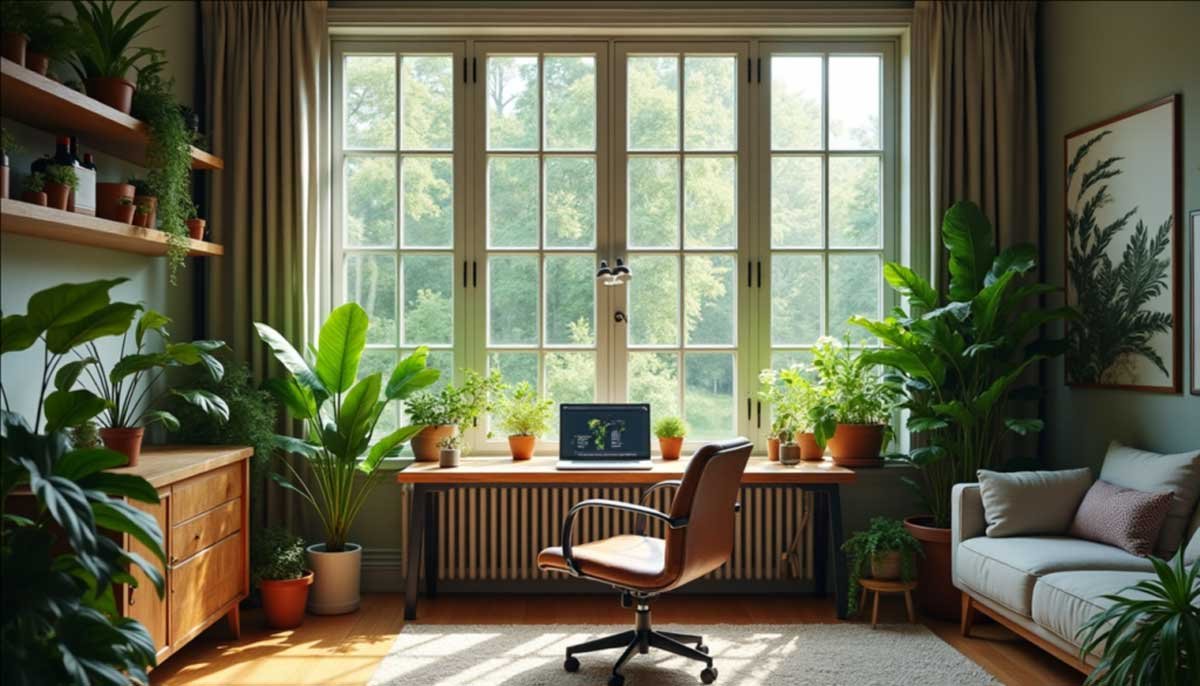
Creating a home office often focuses entirely on productivity, but staring at sterile walls and a glowing screen can leave you feeling drained by the afternoon. As remote work becomes a permanent fixture for many Australians, there is a growing desire to soften our workspaces and make them feel more inviting.
One of the most effective ways to achieve this balance is through biophilic design, a popular architectural concept that integrates elements of nature into indoor environments. By blurring the line between the indoors and the outdoors, you can create a calming workspace. When you prioritise a connection to the natural world, you transform a standard desk setup into a room where you actually want to spend your time.
Establish a Comfortable Baseline
Before filling your study with lush ferns and organic textures, it is vital to get the foundational elements right. A beautiful room is difficult to enjoy if it constantly feels stuffy or overly humid. When preparing your space, you must first ensure your room has reliable everyday home comfort and proper ventilation to keep the environment suitable for both you and your future house plants.
Regulating temperature stability and indoor air quality allows you to work comfortably throughout the changing seasons. Good airflow prevents your room from feeling stagnant during long meetings and keeps humidity levels in check. Once your baseline climate control is sorted, you will have the perfect blank canvas to start bringing natural design elements into the mix.
Anchor the Space with Natural Materials
The furniture you choose sets the entire tone of your home office. Instead of relying on heavy plastics or artificial laminates, look for pieces crafted from natural and sustainably sourced materials. Incorporating timber desks into your room provides a warm, organic focal point that instantly makes the space feel grounded.
The unique grain patterns and earthy tones of solid wood mimic the natural world beautifully, breaking up the harsh lines of computers and filing cabinets. Because every piece of wood is slightly different, it adds character and texture to the room that synthetic materials simply cannot replicate. When paired with woven storage baskets or a natural wool rug, a wooden workspace helps bridge the gap between practical interior decorating and natural living.
The Science Behind Nature in the Workspace
Decorating with natural elements is not just about aesthetics. There is real, measurable psychological value in surrounding yourself with organic touches while you work. Researchers have consistently found that bringing the outdoors inside has a profound impact on cognitive function, stress levels, and overall mental health.
According to a recent article from the University of Minnesota Landscape Arboretum, incorporating biophilic design in the workplace has been proven to increase creativity and overall well-being. Their findings show that workers in environments featuring green elements are six percent more productive and report a massive fifteen percent boost in creativity. By actively investing in natural materials and plenty of sunlight, you are supporting your daily mental clarity.
Practical Ways to Add Greenery and Light
With your foundational furniture and climate control securely in place, it is time to add the final finishing touches. You do not need a massive budget to make your office feel like a garden retreat. Here are a few simple strategies:
- Maximise Natural Light: Position your workspace near a window to soak up sunlight. This helps regulate your circadian rhythm and keeps you alert without relying on harsh overhead fluorescent bulbs.
- Choose Low-Maintenance Plants: Start with hardy varieties like Devil’s Ivy, Snake Plants, or ZZ Plants. These thrive indoors with minimal attention and naturally help purify the air in your study.
- Use Earthy Colour Palettes: Paint your walls or choose decor accessories in soft sage greens, warm terracottas, or sandy neutrals. These shades mimic the colours found in nature and reduce visual fatigue.
- Introduce Natural Scents: Diffuse essential oils like eucalyptus to make the room smell fresh.
Transforming your home office into a natural sanctuary changes the way you approach your workday. By prioritising good air quality, investing in organic furniture, and scattering a few vibrant plants around the room, you can create an environment that feels less like a corporate cubicle and more like a breath of fresh air.