
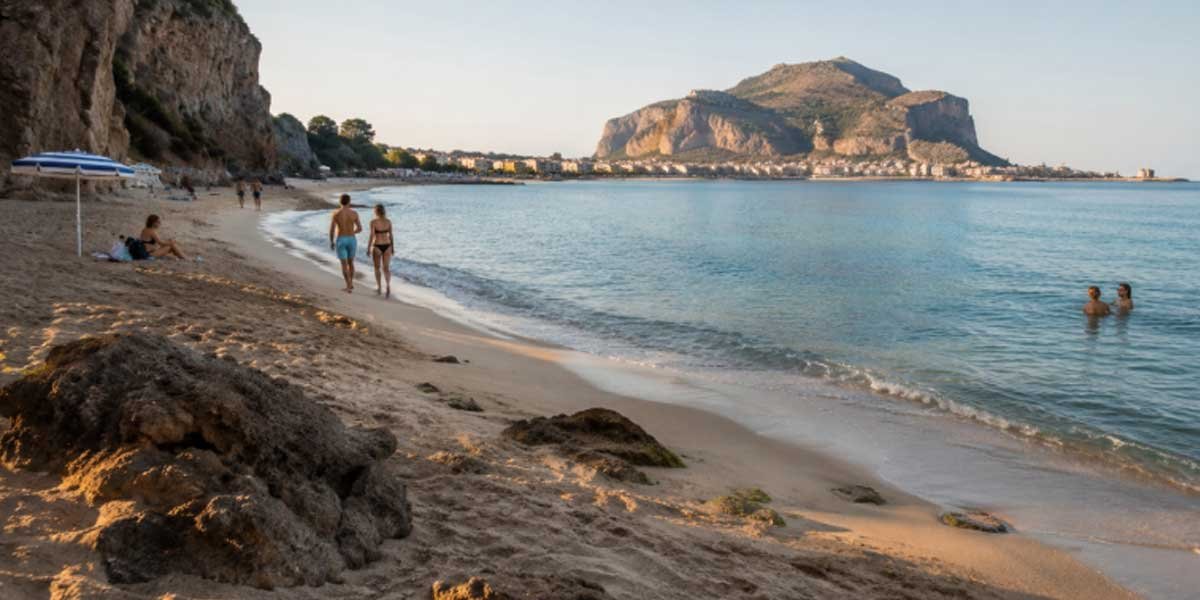
The island is one of Europe’s most sought-after summer escapes, but Sicilians know the real secret is not where to go. It is how to move, when to slow down, and what not to do at the wrong time of day.
Sicily is easy to fall in love with. It is harder to understand at first glance.
To many international travellers, the island appears as a near-perfect Mediterranean postcard: clear waters, baroque towns, fishing villages, Greek temples, volcanic landscapes, evening markets, country villas and long tables under the stars.
But Sicily is not a standard holiday destination. It has its own rhythm, its own habits and its own quiet codes. Those who understand them tend to have a far better trip. Those who do not may still enjoy it, but often find themselves stuck in traffic, arriving at beaches too late, dining in places chosen for the view rather than the food, or trying to do far too much in too little time.
This is the kind of advice locals rarely write down. It is for travellers who want more than a checklist, and would rather experience the island with a little insider sense before everyone else catches on.
For curated stays and practical inspiration, visit https://www.hitsicily.com/.
The first mistake: treating Sicily like a small island
Sicily is often underestimated. On a map it looks compact enough. On the road, in July or August, with heat, coastal traffic and luggage, it feels entirely different.
A common mistake is trying to combine Palermo, Taormina, Noto, Agrigento, Cefalù and the islands in a single short itinerary. It is possible, but it rarely feels like a holiday.
Locals would suggest something else entirely: choose one area and settle into it.
Western Sicily includes Palermo, Trapani, Marsala, the salt pans, San Vito Lo Capo and the Egadi Islands. Eastern Sicily offers Catania, Taormina, Mount Etna, Siracusa and the Ionian coast. The south-east brings Noto, Modica, Ragusa, Scicli, Marzamemi and some of the island’s finest beaches.
Each area is more than enough for a full stay.
The most Sicilian way to travel is not to tick everything off. It is to return to the same café twice, learn the road to the beach, notice the evening light and let a place become familiar.
The beach secret is not the beach. It is the hour
Ask a visitor where to swim in Sicily and they will name a beach. Ask a local and they will likely ask about the wind, the time, and the month first.
That is the difference.
In peak summer, the same beach can feel like two different places. At 8am, the water is calm, parking is easy and the light is soft. At midday, it can be crowded, hot and tiring. By 6pm, it becomes beautiful again, often more enjoyable than in the morning.
The summer rhythm is simple: early beach, long pause in the middle of the day, then out again once the heat eases.
Visitors often try to use every hour. Sicilians know that in August, the hours tend to use you instead.
The 2pm mistake: why Sicilian towns come alive after sunset
One of the most common misunderstandings happens early in the afternoon.
A visitor walks through a Sicilian town at 2pm and finds closed shutters, empty streets and very little activity. The impression is misleading: the town is not asleep, it is simply on pause.
In summer, Sicily adjusts to the heat. Shops close, families go indoors, streets empty and everything slows down. Then, after sunset, the same town transforms. Children fill the piazza, older locals return to benches, restaurants open, façades glow, balconies come alive and the air feels softer.
The rule is simple: never judge a Sicilian town at 2pm.
See it in the morning. See it at night. Only then will you understand it.
A villa is not just accommodation. It is part of the strategy
Villa stays in Sicily are often described as a luxury trend, but the logic is far more practical.
Summer life happens outdoors. A terrace is not an extra feature. Shade is not a detail. A pool is not a luxury add-on. These elements shape the entire day.
A good villa removes friction from the holiday. It offers shade in the hottest hours, privacy after the beach, a kitchen for simple meals, a terrace for long evenings and enough space for people to be together without feeling crowded.
Travellers often choose accommodation for the view. Locals would also ask different questions:
Can you dine outside comfortably?
Is there a town nearby?
Is the road manageable at night?
Are the bedrooms balanced?
Is the pool actually usable in the afternoon?
Can you buy essentials without turning it into an expedition?
The best place to stay is not just beautiful. It makes everything easier.
The best meal may be away from the water
A sea view table is appealing, sometimes unforgettable. But in Sicily, the best meal is not always by the coast.
Some of the most memorable dining experiences happen inland: in villages, in the countryside, on quiet terraces, or in trattorias where the view is irrelevant. That is often where the cooking is more rooted, more generous and more relaxed.
The coast gives you the sunset. The interior gives you something deeper.
Markets are better than algorithms
Travel apps can suggest where to eat. A Sicilian market shows you what to eat.
In Palermo, Catania, Siracusa and smaller towns, markets are not attractions but living indicators of the season. Tomatoes, aubergines, peaches, swordfish, anchovies, almonds, herbs, capers and citrus fruits tell you more than any review ever could.
Go early. Observe. Notice what locals choose. Then follow their lead later in the day.
The wind decides your beach day
In Sicily, the best beach often depends on the wind.
A perfect spot yesterday may be unpleasant today. Another, just a short drive away, may be calm and clear.
Locals read the wind instinctively. Visitors tend to rely on distance and ratings.
The better question is not “Which is the best beach nearby?” but “Which beach works today?”
Do less, but make one day matter
Many visitors overfill their itinerary. Locals tend to value space in the day.
A better approach is to plan one meaningful experience every few days and leave everything else open.
A boat trip.
A long dinner.
A visit to Noto or Ortigia.
A day on the Egadi Islands.
A countryside lunch.
A sunset at the salt pans.
One experience done well is worth more than three rushed ones.
Dinner is late, but aperitivo bridges the gap
Dinner in Sicily often happens late in summer. Rather than waiting hungry, aperitivo sets the pace.
A glass of wine, small plates, olives, arancini, caponata or seafood bites turn the evening into a gradual transition rather than a delay.
Evening is not a short part of the day in Sicily. It is often the best one.
Small bakeries can shape the entire stay
Not every good meal needs a reservation.
A local bakery can quietly become central: breakfast, beach snacks, bread for dinner, something sweet on the way home.
The same applies to village bars, fruit shops and roadside granita stops.
Travellers often search for the best restaurant. Locals rely on the dependable everyday places.
The real luxury is not formality
Sicily is quietly redefining Mediterranean luxury.
It is no longer about polished service or formal settings, but about space, privacy, character and time.
A pool after the beach.
A terrace without interruptions.
A kitchen that feels usable.
A village within easy reach.
A dinner that does not require rushing.
The island does not need to be staged. It needs to be lived.
What Sicilians would tell you before you book
Choose location before design.
Do not move base too often.
Avoid famous beaches at peak hours.
Ask about the wind.
See towns after sunset.
Book restaurants in August.
Do not underestimate driving times.
Spend at least one evening inland.
Leave space in your itinerary.
Treat the terrace as part of the stay.
The final secret: Sicily is not a checklist
Sicily is not at its best when reduced to a list of sights.
Its strongest memories are often small: a late swim, a market sound, an evening square, a bakery bag in the car, a quiet country road, a granita eaten standing up.
People come for the sea, food and light. They return because nothing ever feels fully finished.
There is always something else just beyond the next bend.
Travel less. Notice more.
More info: https://www.hitsicily.com/.