
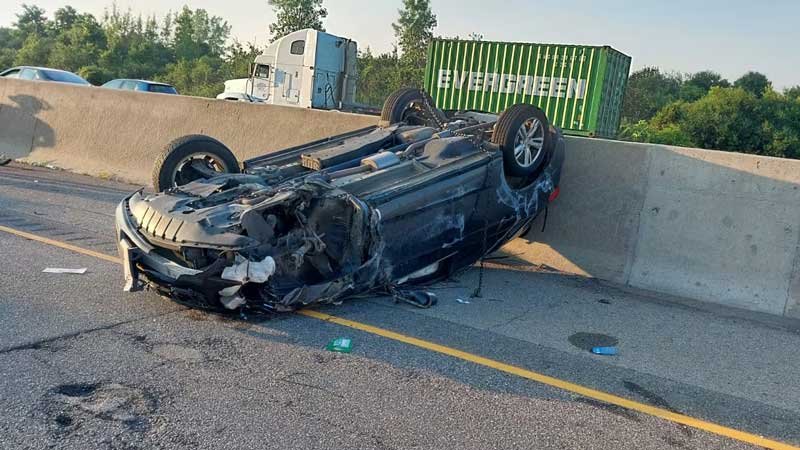
Losing a loved one in a sudden highway collision is a devastating experience that shatters your world in an instant. Right now, you are likely feeling a heavy mix of profound grief, confusion, and frustration. You want answers about what happened, but instead, you face a cold wall of police reports, aggressive insurance adjusters, and mounting financial pressures.
You are not alone in facing this deeply painful and systemic issue. Nationwide, a total of 40,901 people died in motor vehicle crashes in the United States in 2023. Behind each of those numbers is a family left grappling with an unimaginable loss and searching for a way forward.
The Urgency of Evidence Preservation
Following a fatal commercial or highway accident, time is the absolute enemy of evidence. The days immediately after a crash are chaotic, but they are also a critical window for building a strong foundation for your case. If you wait for the official police investigation to conclude, vital pieces of the puzzle may disappear completely.
Physical evidence at the crash site is incredibly fragile. Crucial details like tire skid marks, fluid spills, and specific debris patterns tell the story of how the crash actually occurred. Weather, passing traffic, and basic road cleanup operations can wash away or destroy these physical markers within hours.
Digital evidence faces an even higher risk of disappearing. Commercial trucking companies and corporate fleets often overwrite dashcam surveillance footage within days. They might also erase Electronic Logging Device (ELD) data if they are not legally forced to preserve it. This data holds the truth about vehicle speed, braking patterns, and driver actions in the final seconds before impact.
Starting a case by bringing in experienced lawyers is how a family moves from being a bystander in a police investigation to taking control of the facts. Instead of waiting for a slow-moving official report, a legal team immediately steps in to secure the digital and physical proof that corporate fleets often try to clear away. This level of professional oversight ensures that data is preserved before it can be overwritten or “lost”. By having a firm manage the high-pressure race against time, the burden of proof is handled by specialists who know exactly which sensors and logs to pull to reconstruct the truth of the accident.
Deep Forensic Investigation: Finding the Root Cause
Accepting a surface-level police report is rarely enough when a life is lost on the highway. Police officers do their best to secure a scene, but they often lack the time and resources to conduct a highly technical accident reconstruction. Independent investigators must step in to analyze the complex mechanics of the crash and look for historical patterns of corporate negligence.
In commercial accidents involving semi-trucks or delivery vehicles, analyzing ELDs is a mandatory step. These devices track precisely how long a driver has been behind the wheel. A deep dive into this data frequently exposes hours-of-service violations, severe driver fatigue, or intentionally falsified logbooks.
Thorough experienced lawyers’ investigations, they look beyond the driver to uncover third-party liability. The root cause of a crash might trace back to loading crews at a port who improperly secured a heavy cargo load. It could point to maintenance vendors who ignored bald tires or signed off on failing brakes to save money.
Worrying about the cost of these intense investigations should not stop you from seeking the truth. Specialized wrongful death law firms advance all costs for these deep forensic investigations. This means grieving families pay nothing out of pocket for the expert analysis required to prove negligence and build a compelling case.
Fighting Bias and Reframing the Narrative
One of the most painful realities grieving families face is the inherent bias often found in initial police reports. Law enforcement sometimes defaults to blaming the victim, especially in fatal accidents involving motorcycles, bicycles, or pedestrians. Because your loved one is not there to tell their side of the story, early reports might unfairly label them as reckless or at fault.
Insurance adjusters actively look for this bias and use it as a weapon. They will highlight any suggestion of victim fault to shift blame away from their client and minimize the financial payout they owe your family. They treat your tragedy as a liability to manage, rather than a profound human loss to make right.
You must reject the common excuses offered by at-fault drivers. When a driver says, “I just didn’t see him,” insurance companies try to frame this as an unavoidable, tragic accident. Legally, however, that statement is often an admission of the driver’s negligence and a clear failure to yield. Reframing the narrative with hard forensic evidence stops insurance companies from escaping accountability.
Navigating Your Legal Rights and Recovery
The legal system uses complex terminology that can easily overwhelm families who are already navigating deep grief. However, understanding the avenues for financial compensation in California does not require a law degree. It requires breaking down the process into clear, actionable steps.
Fatal highway accidents often demand a dual-pronged legal strategy to ensure maximum accountability. Holding the responsible parties fully liable requires looking at the harm caused to both the surviving family members and the victim before they passed.
Taking legal action is not just about pursuing money. It is about securing the long-term financial stability that your family was unjustly robbed of. A successful claim ensures you do not have to shoulder the crippling financial burden created by someone else’s reckless choices.
Wrongful Death vs. Survival Actions
In California, families typically pursue two distinct types of legal claims after a fatal accident. While they are usually filed together, they serve entirely different purposes under the law.
| Legal Claim | Definition & Purpose |
| Wrongful Death Action | A lawsuit designed to compensate the surviving family members for their specific losses. This covers the loss of love, companionship, guidance, and the expected future financial support the deceased would have provided. |
| Survival Action | A claim brought on behalf of the deceased person’s estate. It aims to recover damages the victim personally suffered between the moment of the accident and their passing, such as their medical bills and conscious pain and suffering. |
Conclusion
While absolutely no legal settlement can ever replace the loved one you lost, uncovering the truth provides a necessary and stabilizing roadmap for your family’s future. Holding negligent parties accountable transforms a chaotic tragedy into a structured pursuit of justice and financial security.
Taking action requires moving quickly to preserve fading physical and digital evidence. It demands a thorough forensic investigation to expose the root causes of the crash and a firm stance against the systemic bias that attempts to blame the victim.
You do not have to navigate this complex legal, financial, and emotional maze alone. Surrounding yourself with dedicated advocates like a wrongful death law firm, thorough investigators, and empathetic support networks ensures your family’s rights are protected, your loved one’s memory is honored, and your community is made safer for everyone.