
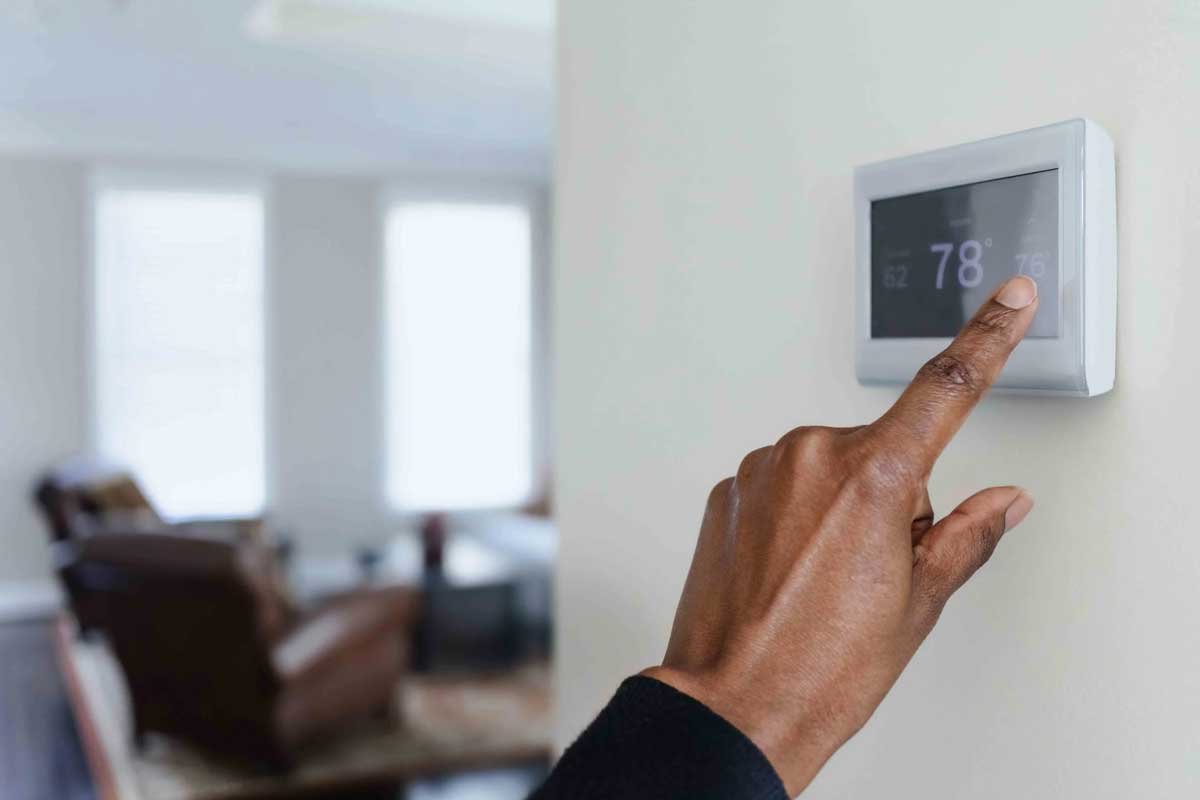
Turning the heat down at night is often recommended as an easy way to save energy, but many homeowners aren’t convinced it actually works. A common concern is that the furnace or boiler (or any heating system) just has to make up for it later, canceling out the savings. Whether that’s true depends on how heat is lost from a home overnight and what really happens when the thermostat is lowered.
What Happens When Turning Heat Down At Night?
When you turn heat down at night or lower the thermostat, you’re not “slowing” the furnace. You’re lowering the target temperature the system is trying to maintain and allowing the home to gradually drift downward instead of holding a tight temperature band.
As a result, the system runs less frequently overnight because the house is allowed to cool. Whether you’re turning heat down at night manually or using a programmed schedule, the furnace or heat pump cycles fewer times, which reduces total runtime. Heat loss through walls, windows, and the roof slows down as the indoor temperature gets closer to outdoor temperature.
The important detail most people miss is that heat loss is driven by the difference between indoor and outdoor temperature. Heat escapes faster when that difference is large. Lowering thermostat at night narrows that gap, which slows the rate of heat leaving the home. So when you turn heat down at night, you’re not just “using less heat”, you’re reducing the rate of heat loss all night long. That’s why setbacks work.
In the morning, the system runs longer to bring the house back up to the daytime setpoint. System runtime shifts, not disappears. The system runs less overnight but runs longer during the morning recovery, and total energy use is still lower because the house lost heat more slowly during the setback period after turning heat down at night. In a properly sized system with correct furnace installation, that longer recovery cycle is completely normal and expected.
Inside the home, air temperature drops relatively quickly, but solid materials, floors, walls, furniture, cool more slowly. That’s why some homes feel comfortable even after several degrees of setback, while others feel chilly fast. The building’s insulation and air sealing determine how dramatic that change feels when lowering thermostat at night.
Does Turning Down The Heat At Night Save Money?
The savings depend on how many degrees you lower it, how many hours you leave it lowered, how insulated and airtight your home is, and the type of heating system installed.
In many homes, turning heat down at night by 5-10°F for 8 hours can reduce heating costs by roughly 5-10%, with savings more noticeable in cold climates. Poorly insulated homes often see bigger savings because they lose heat faster.
The key principle is simple: the smaller the temperature difference between indoors and outdoors, the less energy your system needs to maintain comfort. That’s why the myth you’ll hear, “it costs more to reheat the house in the morning”, isn’t how physics works. The system only replaces the heat that was lost, and because heat loss slowed overnight after you turn down heat at night, total energy use is still lower even with the morning recovery cycle.
The only exception is homes with very high thermal mass, like thick concrete slab homes, which may take longer to recover and feel less responsive. In fact, if lowering thermostat at night produces noticeable savings, it may also indicate that the home loses heat relatively quickly, pointing to insulation or air leakage improvements as a larger long-term opportunity.
How Low To Set Thermostat At Night?
For most households, 60-67°F works well for sleep, and 65°F is a common sweet spot. If you like cooler sleeping conditions, 62-64°F is perfectly reasonable if the home can recover comfortably in the morning. Most households land somewhere in that 60°F to 67°F range, depending on comfort preferences when they turn heat down at night.
A practical way to approach it is to start with a 5-7°F reduction from your daytime temperature when you lower thermostat at night, observe how long the system takes to recover on a cold morning, and adjust the schedule so the house reaches your preferred temperature before you wake up. If you wake up at 7am, program the recovery to start at 6am, not when you wake up.
Lower it as much as you’re comfortable with when turning heat down at night, while still allowing the system to recover in time for your morning routine. Comfort isn’t only about the number, it’s about recovery timing. If the home hasn’t warmed back up when your day starts, the setback feels unpleasant even if it saved energy. Cooler sleeping environments, often around 62-65°F, also align with how the body naturally lowers core temperature during sleep.
Is Lowering Thermostat At Night Bad For Your Heating System?
In almost all cases, no.
Furnaces, boilers, and heat pumps are designed to cycle on and off. Allowing the system to rest overnight by lowering thermostat at night can reduce total runtime, and fewer overnight cycles can reduce wear. Longer recovery runs are normal and safe, and most modern systems are built to handle temperature setbacks. Keeping up with routine maintenance, including a seasonal furnace tune up, helps ensure those recovery cycles remain efficient.
However, system type matters. Gas furnaces generally handle setbacks very well when you turn down heat at night. Boilers and radiant floor systems recover slowly and may perform better with smaller setbacks. Air-source heat pumps in very cold climates may activate auxiliary electric heat during aggressive morning recovery, which can reduce savings. Older, oversized systems may short cycle during recovery, and homes with humidity issues may notice drier air during longer runs after turning heat down at night.
For most modern systems, modest setbacks are completely safe. Extremely large temperature drops are usually unnecessary and can reduce efficiency depending on equipment type.
Can Turn Down Heat At Night Improve Sleep?
Most sleep research shows people sleep better in slightly cooler environments. Ideal bedroom temperature often falls between 60-67°F.
Core body temperature naturally drops during sleep, and cooler air supports melatonin production. When you turn heat down at night, it helps your body lower core temperature, reduces night sweats, and can improve deep sleep cycles. Overheated rooms can disrupt deep sleep.
The only time it hurts comfort is if bedrooms get significantly colder than the rest of the house, there are drafts or poor insulation, recovery timing is poorly programmed, or exterior walls become very cold overnight. Surface temperatures, walls, windows, floors, also matter, which is why this is more noticeable in poorly insulated bedrooms or rooms with large windows when turning heat down at night.
If someone says they “hate setbacks,” it’s usually a programming issue, not a temperature issue. Proper insulation and air sealing reduce those discomfort swings when you lower thermostat at night.
Do Smart Thermostats Help Turn Heat Down At Night?
Smart thermostats improve effectiveness by learning recovery time automatically, starting the heat early so it’s warm when you wake up, adjusting based on outdoor temperature, preventing overshooting the target temperature, and tracking runtime data so you can see real savings. Some even factor in humidity and occupancy patterns.
The key difference: manual setbacks rely on discipline. Smart thermostats make turning heat down at night automatic and precise. That precision, especially timing accuracy, is what improves both comfort and savings when you turn heat down at night consistently.
The biggest advantage isn’t intelligence, it’s proper recovery management. Learning how long your system takes to recover and starting heating early eliminates the common complaint of “it’s freezing when I wake up” after you turn down heat at night.
When You Shouldn’t Turn Down Heat At Night
There are specific situations where setbacks may not make sense or should be minimized.
Homes with radiant floor heating that respond very slowly. Very cold climates where aggressive setbacks trigger expensive auxiliary heat. Homes with plumbing in exterior walls at risk of freezing. Buildings with significant air leakage and comfort imbalance. Occupants who are sensitive to temperature fluctuations. If the system already struggles to maintain temperature.
Also, if someone already keeps their thermostat at 60°F all day, there’s not much room to go lower safely. Homes already kept at low temperatures may simply have little room to lower further safely even if they try turning heat down at night.
Setbacks are a strategy. They’re not mandatory. In these cases, smaller adjustments or consistent temperatures may perform better than aggressively lowering thermostat at night.
Is Turning Heat Down At Night Really Worth It?
For most homes, yes, especially over an entire heating season.
The real benefit isn’t just one night of savings. Even modest nightly reductions from turning heat down at night compound over months, 120+ nights per winter, and can add up to 5-8% over a season, especially with rising energy costs. That comes from reduced overall runtime, lower peak demand stress on the system, and improved sleep comfort.
But the bigger value? It’s controlled efficiency.
You’re not heating empty space. You’re heating for actual comfort and occupancy. That’s the difference between reactive heating and intentional heating, aligning heating output with real comfort needs rather than maintaining peak temperature 24/7 by avoiding unnecessary heating instead of turn heat down at night.
However, thermostat setbacks are a fine-tuning strategy. If major savings are the goal, improvements to insulation, air sealing, and system efficiency will have a far greater impact than any temperature adjustment alone.
Used correctly, lowering thermostat at night is a practical, low-risk way to reduce energy use while often improving sleep comfort at the same time.