
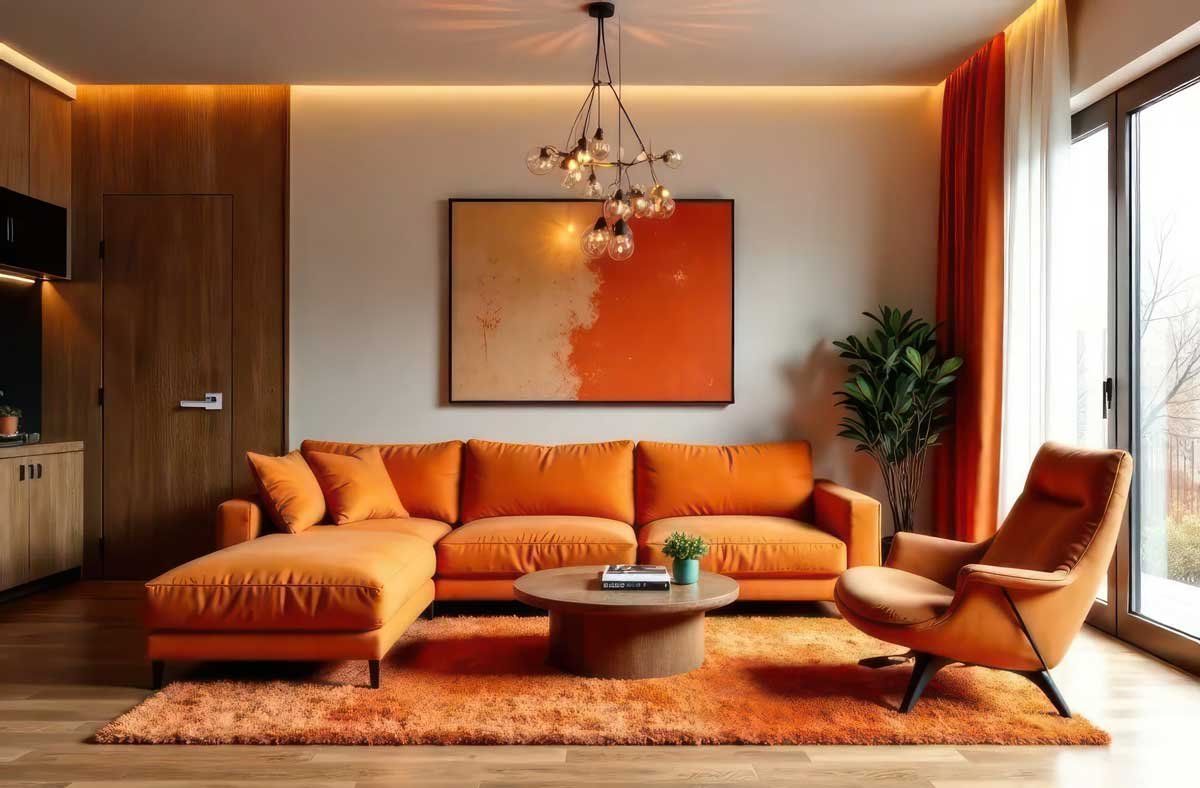
Warmth isn’t just something you set on a thermostat, it’s something you feel in your body the moment you enter a space. Even after a furnace replacement improves the actual temperature of a home, a room can still feel cold if the environment works against comfort. This is where interior design, psychology, and physical warmth quietly intersect.
What Warmth Means In Warm Interior Design
Warmth in interior design is a blend of measurable temperature and felt experience, and the second one often matters more. Humans don’t experience spaces like thermostats do, we respond emotionally first, physically second. Warm interior design isn’t an aesthetic choice, it’s a bodily response.
A room can be technically warm but still feel cold if it lacks softness, depth, or visual balance. At the same time, a space can feel warm and inviting even at a lower temperature if it supports comfort on a psychological level. This gap between actual heat and perceived temperature is where many interiors fail.
True warmth happens when the body is comfortable and the nervous system relaxes. That’s why the best examples of warm interior design don’t just heat the air, they create a sense of shelter, ease, and belonging. Interior design often treats warmth as a mood or a style, but people don’t feel warmth visually first. They feel it through how relaxed their body becomes in a space and how stable the perceived temperature feels over time.
Design doesn’t replace heat. It either supports the body’s sense of thermal comfort or fights it. The best interiors do the former quietly.
How Does Temperature Affect Mood
Temperature quietly shapes how we feel, think, and interact. When a space is too cold, the body stays slightly alert. Muscles tense, movement becomes purposeful, and people are less likely to linger. When a space is comfortably warm, the body relaxes, breathing slows, posture softens, and we’re more open to rest and connection. Even when a furnace is maintaining the right temperature on paper, perceived temperature can still vary based on how the space is designed. Temperature doesn’t change mood directly, it changes tension levels and influences perceived temperature.
That’s why living rooms, bedrooms, and reading spaces tend to feel better a little warmer, while kitchens and workspaces tolerate cooler temperatures. Emotional comfort isn’t about hitting a universal “perfect” number, it’s about matching temperature to how the room is meant to be used. Thermal comfort depends on whether the temperature supports the behavior the room is meant to encourage, not just what the thermostat displays.
Why Perceived Temperature Matters In Interior Spaces
Because the thermostat measures air, your brain measures experience. Even when a furnace is delivering consistent heat, perceived temperature is shaped by far more than heat output. Rooms feel warmer when they have layered textures that absorb light and sound, avoid stark contrasts and harsh shadows, use materials that visually signal comfort, and limit drafts and cold surface exposure.
A space with bare walls, reflective surfaces, and sharp lighting will feel colder than a layered room at the same temperature. Visual cues tell your brain what to expect, and your body follows that signal. When perceived temperature drops, so does comfort, even if thermal comfort is technically within range.
If a room visually signals softness, enclosure, and stability, the body expects warmth and often experiences it. If a room looks exposed, echoing, or unfinished, the body stays cautious, even at the same temperature. This is why adding heat rarely fixes a space that feels cold. The issue usually isn’t air temperature, it’s psychological exposure affecting perceived temperature.
How Color Shapes Warm Interior Design
Color temperature has nothing to do with actual heat, but everything to do with perception. In warm interior design, color is one of the strongest tools for shaping perceived temperature. Warm colors visually advance toward us, while cool colors recede. This affects how enclosed, intimate, or open a space feels.
But it’s not just about hue. Saturation and undertone matter more than people realize. A muted clay tone feels warmer than a bright red. A green with yellow undertones feels warmer than a blue-leaning one. Even neutrals can act as colors that make a room feel warm depending on what’s underneath.
Rooms feel colder when light and dark extremes are pushed too far apart. They feel warmer when color transitions are gentle and continuous. This is why a muted, earthy palette often works better than high-contrast schemes when choosing colors that make a room feel warm.
Warmth comes from cohesion, not boldness. When color feels aggressive, the space feels less safe, and therefore less warm.
How To Make A Room Feel Warm And Cozy With Color
Warmth comes from restraint and depth, not boldness. A room feels warmer when colors feel connected and intentional, not when they fight for attention. Warm interior design relies on consistency more than saturation, allowing perceived temperature to stay stable and comfortable.
Designers often create cozy spaces by choosing mid-tone, earthy colors instead of stark light or dark extremes, layering similar hues in different values rather than high-contrast palettes, and selecting colors that make a room feel warm without overwhelming the space.
Designers create warmth by narrowing the color range and letting subtle variation do the work. When everything relates, the space feels intentional and calm. When everything competes, the room feels restless, even if the colours to make a room feel warmer are technically present.
Using Colours To Make A Room Feel Warmer
Paint is only one layer, and often not the most powerful one. Paint is the least convincing way to create warmth or influence perceived temperature on its own.
Warmth shows up through upholstery and textiles with rich, grounded tones, natural wood finishes with visible grain, rugs that anchor a space visually and physically, and art and decor that introduce warmth without dominating the room. These materials are some of the most effective colours to make a room feel warmer because they exist in three dimensions.
When color lives in materials, it feels more natural and less decorative. That’s what makes a space feel lived-in rather than styled. Color feels warmer when it’s embedded in materials you can touch, wood, fabric, stone, leather. These surfaces absorb light instead of reflecting it, which supports both perceived temperature and thermal comfort.
When warmth relies on paint alone, it often feels temporary. When it comes from materials, it feels permanent.
How Lighting Affects Perceived Temperature
Lighting might be the single biggest factor people underestimate. Warm light doesn’t just change how a room looks, it changes how people behave in it and how they judge perceived temperature. Soft, warm lighting reduces visual tension and makes surfaces feel closer and more tactile.
The warmest interiors use layered lighting, combining ambient light for overall comfort, task lighting where function matters, and accent lighting to add depth and softness. When light comes from multiple sources at human height, a room feels safer, calmer, and warmer, regardless of actual thermal comfort.
Overhead lighting flattens a room and exposes every surface equally, which feels colder no matter the bulb temperature. Warm interior design relies on directional, layered light that mimics natural evening conditions. If the light doesn’t allow shadows to exist, the room won’t feel warm, it will feel controlled.
The Psychology Behind Warm Interior Design
Warmth is deeply personal. We associate warmth with memories, a grandparent’s house, a favorite café, a childhood bedroom. Cultural background also plays a role in how perceived temperature is interpreted. What feels cozy in one country might feel heavy or enclosed in another.
That’s why warm interior design isn’t universal. It’s emotional. People respond to spaces that echo environments where they previously felt safe, often unconsciously. Those memories shape expectations around thermal comfort and visual warmth.
Designers who get this right don’t chase trends, they pay attention to how people want to feel in a space, not just how the space should look. Designers can’t manufacture that feeling, but they can avoid working against it by creating spaces that feel enclosed, predictable, and human-scaled.
Balancing Design And Thermal Comfort
The best interiors don’t choose between emotion and performance, they support both. That balance comes from designing for how rooms are used, not just how they look, pairing visual warmth with consistent, comfortable heating, ensuring regular furnace service to maintain reliable performance, reducing drafts and cold surfaces that undermine thermal comfort, and using design to enhance how heating and cooling systems are experienced.
When a room looks warm but feels cold, people notice. When a room feels warm but looks sterile, something still feels off. True comfort happens when design and perceived temperature tell the same story.
Design should amplify good thermal comfort, not disguise its absence. The most successful interiors align what the body feels with what the eye expects, no tricks, no overstyling.